
Essential Spring HVAC Tasks for Energy Efficiency
Spring offers an opportunity to prepare the HVAC system before peak summer demand. Focused attention now supports lower utility costs, improved air quality, and reliable operation during hot weather. A well maintained system also supports a more comfortable interior, which can reduce the temptation to lower the thermostat excessively.
Key Tasks
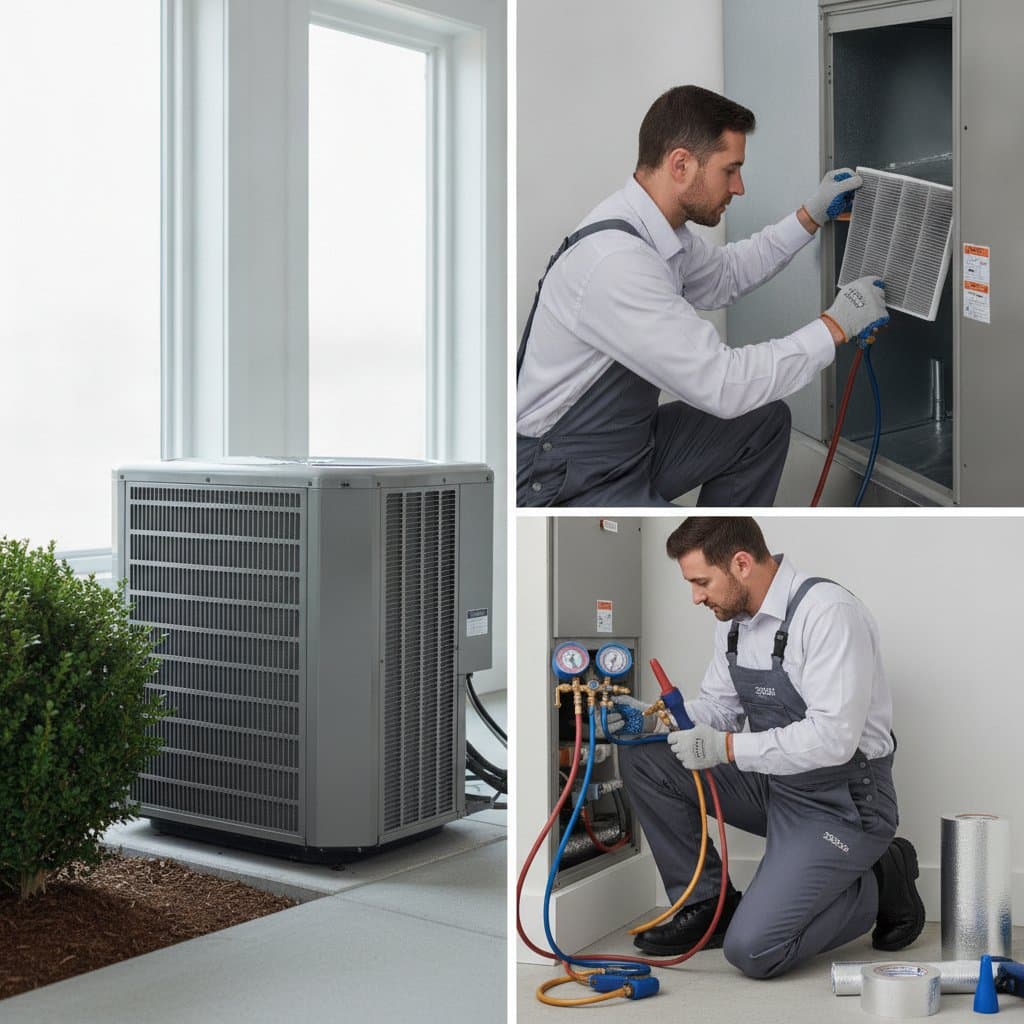
- Replace air filters on a one to three month schedule
- Verify refrigerant charge ahead of cooling season
- Examine ducts for leaks and missing insulation
- Remove debris from the outdoor condenser
- Arrange professional service for older systems
- Inspect insulation around accessible attic ductwork
- Test ceiling fans and room airflow before hot weather arrives
These steps remain accessible to most homeowners while delivering measurable results. Combining HVAC maintenance with simple home improvements, such as sealing gaps around doors and windows, can further reduce the amount of conditioned air lost outdoors.
Clearing Accumulated Winter Particles
Winter operation deposits dust and dander inside the system. When cooling begins, these particles move through living spaces. Open the filter compartment and inspect the element. Replace any filter that shows gray discoloration or heavy buildup.
Standard disposable filters range from ten to thirty dollars. A clean filter lowers motor workload and can raise efficiency by up to fifteen percent. Confirm the exact dimensions printed on the old frame before purchase.
Choose a filter rating that matches the equipment manufacturer’s recommendation. An overly dense filter can restrict airflow, especially in older systems. Homes with pets, smokers, or allergy concerns may require more frequent replacement. Mark the change on a household maintenance list so the task does not get overlooked during busy renovation projects.
Examining Air Ducts
Ducts that leak or collect debris waste conditioned air. Small openings in attics or crawl spaces force the equipment to run longer. Use a flashlight to scan joints for separation and note dust trails around registers.
Professional duct cleaning for an average home costs three hundred to six hundred dollars. The service restores airflow volume and reduces the volume of airborne particles that reach occupied rooms.
Also inspect visible insulation around ducts. Compressed or missing insulation allows cooled air to warm before reaching bedrooms and living areas. Seal accessible joints with approved foil tape or duct mastic, not ordinary cloth duct tape. While checking registers, move furniture and rugs away from vents so each room receives balanced airflow.
Restoring the Outdoor Condenser
Leaves and dirt restrict airflow across the condenser coils. Disconnect power at the service switch before any work. Remove the top panel and vacuum loose material with a soft brush attachment.
Rinse fins with low pressure water. Straighten bent fins with a fin comb if needed. Maintain two feet of clearance around the cabinet to support steady heat rejection.
Trim nearby shrubs and remove weeds that could block the fan. Avoid planting dense beds directly around the unit, even when landscaping is part of a larger exterior design plan. A simple gravel border can improve drainage and make future maintenance easier. Never use a pressure washer on the fins because excessive force can bend delicate metal and reduce airflow.
Reviewing Refrigerant Lines
Low refrigerant reduces cooling capacity and stresses the compressor. Inspect visible lines for frost, oil stains, or damaged insulation. The larger suction line should feel cool during operation while the smaller liquid line should feel warm.
A technician visit for pressure testing and recharge ranges from one hundred fifty to four hundred dollars. Correct charge levels can lower energy consumption by as much as twenty percent.
Refrigerant problems usually indicate a leak rather than normal consumption. Homeowners should not attempt to add refrigerant themselves. Ask the technician to identify and repair the source before recharging the system. Replacing cracked insulation around the suction line is a simple improvement that helps maintain efficient operation.
Updating Thermostat Settings
Compare thermostat readings against a calibrated room thermometer. Differences greater than two degrees indicate the need for recalibration or replacement. Smart models priced between one hundred and two hundred fifty dollars learn occupancy patterns and often qualify for utility rebates.
Place the thermostat away from direct sunlight, kitchen heat, supply vents, and drafty doors. These influences can produce inaccurate readings and unnecessary cycling. During interior decorating projects, keep furniture and curtains from blocking the thermostat. A programmable schedule can maintain moderate settings when rooms are empty while preserving comfort when residents return.
Clearing the Condensate Drain
Moisture collected during cooling exits through a small drain line. Algae growth can block flow and cause overflow. Locate the drain pan beneath the indoor coil. Flush the tube with a vinegar and warm water solution to restore free drainage.
Check the area around the pan for rust, standing water, or stains on nearby drywall. Early signs of moisture damage deserve prompt attention, particularly in finished basements, closets, and laundry areas. A float switch can shut down the system if the drain backs up, helping protect flooring and surrounding cabinetry.
Verifying Overall Operation
Run the system in cooling mode and confirm cool air reaches each room within minutes. Listen for unusual sounds and check that the outdoor fan rotates smoothly. Uneven temperatures or odd noises may indicate worn components that benefit from early attention.
Systems older than ten years or those with repeated service calls warrant a professional energy audit. Assessments between one hundred and two hundred dollars identify insulation gaps and sealing opportunities that affect HVAC performance.