
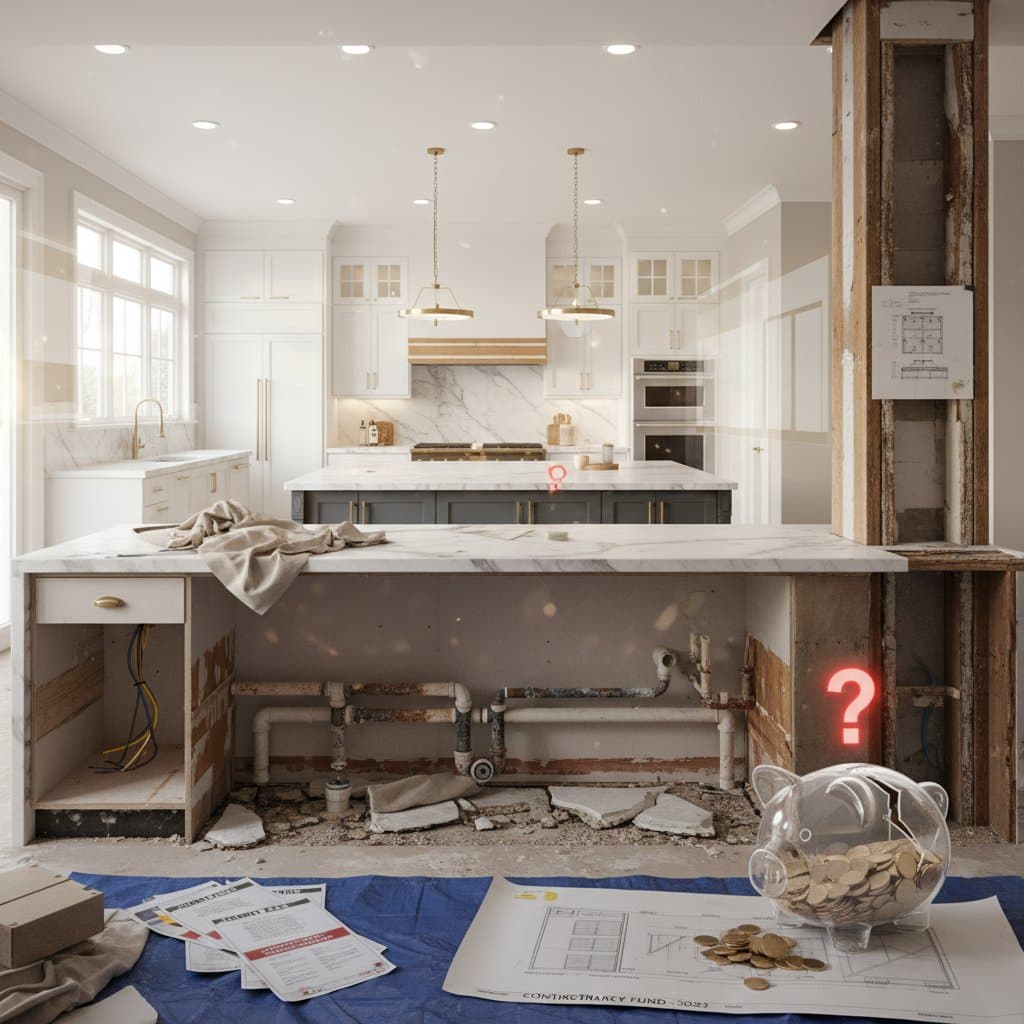
Unseen Expenses in 2025 Kitchen Remodels: Safeguard Your Budget
Homeowners often envision a seamless kitchen renovation that enhances daily life and boosts property value. However, unforeseen expenses frequently emerge during the process, transforming an exciting project into a financial challenge. Common issues include outdated infrastructure, regulatory requirements, and installation adjustments that inflate costs beyond initial estimates.
This article details the primary hidden costs associated with kitchen remodels in 2025. By identifying these potential pitfalls early, readers can implement strategies to maintain control over their budgets and achieve a successful outcome.
Structural Issues Uncovered During Demolition
Demolition phases often expose problems concealed for years. Water damage from past leaks can weaken subfloors, necessitating replacement to prevent future hazards. Similarly, wall studs might fail to align with updated building codes, requiring reinforcement for stability.
Electrical systems from previous decades pose another risk. Outdated wiring cannot support the demands of contemporary appliances, such as high-powered ranges or multiple small devices. Professional assessment before starting work identifies these concerns; for instance, replacing subfloor joists typically costs eight to twenty dollars per square foot, while full rewiring adds three thousand to five thousand dollars.
To mitigate these surprises, schedule a pre-demolition inspection by a structural engineer. Allocate ten percent of the total budget to a contingency fund specifically for structural repairs. This preparation ensures safety without derailing the project timeline.
Navigating Permit Fees and Building Code Updates
Permits represent an essential yet often underestimated expense. Local authorities charge fees ranging from two hundred to two thousand dollars, based on the renovation's scale and required inspections. Contractors usually manage the application process, but homeowners bear the costs.
Building codes have tightened in recent years, particularly regarding ventilation and electrical safety. Projects may demand installation of a vent hood with precise airflow ratings or dedicated circuits for energy-intensive equipment. Compliance avoids fines and delays, yet each requirement increases material and labor expenses.
Contact the local building department early to obtain a detailed permit checklist. Request a written breakdown from your contractor outlining all anticipated fees and inspections. This transparency allows for accurate budgeting from the outset.
Appliance and Hardware Installation Challenges
Precise planning rarely accounts for real-world fit issues. A selected refrigerator might obstruct adjacent pathways once positioned, or undercabinet lighting could demand unforeseen transformers and wiring modifications. These discrepancies arise from minor measurement variances or overlooked spatial constraints.
Cabinet hardware, such as pulls and hinges, sometimes requires custom adjustments to align perfectly. Disposal of old appliances adds further costs, with professional hauling services charging fifty to one hundred dollars per item, plus potential landfill fees.
Purchase major appliances ahead of schedule and stage them on-site prior to cabinet installation. Use 3D modeling software during the design phase to simulate placements accurately. Set aside five percent of the budget for these refinements to address issues promptly.
Design Changes and Mid-Project Adjustments
Initial designs evolve as homeowners experience the space differently. A preferred countertop material might prove incompatible with the cabinet layout, prompting costly alterations. Custom elements, like bespoke shelving or integrated tech features, often exceed estimates due to fabrication complexities.
Labor for redesigns compounds the expense; for example, relocating a sink involves plumbing rerouting at two hundred to four hundred dollars per hour. These changes, while enhancing functionality, can add thousands if not controlled.
Establish a change order protocol with your contractor, requiring written approval for any modifications. Limit revisions to essential updates by finalizing the design through mockups or virtual tours. This discipline preserves the original budget allocation.
The Costs of Energy-Efficient Enhancements
Opting for energy-efficient options, such as Energy Star appliances and LED fixtures, delivers long-term benefits through reduced utility bills. However, these upgrades carry premium prices; certified refrigerators cost ten to twenty percent more than standard models. Recessed lighting installations may need specialized transformers or compatible dimmers, adding to electrical outlays.
Insulation improvements or smart thermostats for integrated systems further elevate upfront investments. While a three-hundred-dollar premium on an appliance might recover via savings within three years, such features must integrate into the core budget.
Evaluate return on investment using online calculators from utility providers. Prioritize high-impact upgrades, like efficient ovens, over aesthetic ones. Incorporate these costs during initial planning to avoid treating them as optional add-ons.
Waste Disposal and Cleanup Overlooked
Removing old cabinets, countertops, and flooring generates substantial debris. Hauling and disposal services charge based on volume, often one hundred to five hundred dollars for a standard kitchen. Recycling programs for metals or countertops can offset some fees, but transportation logistics increase the total.
Environmental regulations in 2025 mandate proper handling of hazardous materials, such as lead paint or asbestos in older homes. Testing and abatement, if required, add one thousand dollars or more.
Select a contractor experienced in sustainable disposal practices. Budget for dumpster rentals or partner with local recycling centers in advance. These steps minimize environmental impact while controlling expenses.
Strategies for a Budget-Conscious Renovation
Effective planning transforms potential pitfalls into manageable elements. Conduct thorough pre-project audits, including home inspections and code reviews, to uncover issues early. Collaborate closely with professionals to develop a comprehensive budget that includes buffers for variables.
Track expenses in real time using simple spreadsheets or apps designed for renovations. Regular check-ins with the team ensure alignment and quick resolution of deviations. By anticipating hidden costs, homeowners complete their 2025 kitchen remodels on schedule, within financial limits, and with enhanced satisfaction.