
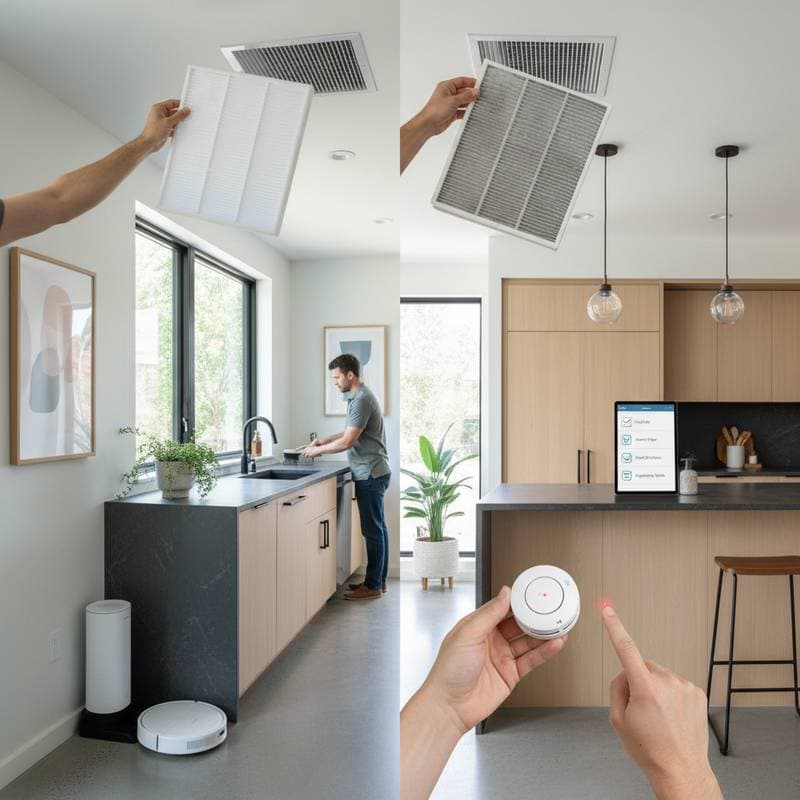
Essential Monthly Checks for Your Home
Many homeowners sense that something requires attention in their living space, yet pinpointing the issue proves challenging. Neglecting routine maintenance frequently results in substantial repair expenses down the line. Fortunately, a straightforward monthly regimen ensures smooth operation, prolongs the durability of key systems, and identifies minor problems before they escalate into major concerns.
View this guide as a practical monthly inspection tailored to integrate seamlessly into daily life, requiring minimal time investment.
1. Replace HVAC Filters
Heating, ventilation, and air conditioning systems rely on clean filters to function efficiently. Examine and replace the filter in your HVAC unit at the start of each month, or more frequently if you notice reduced airflow or higher energy use. A clogged filter strains the system, increases utility bills, and shortens equipment life; a new filter, typically costing under ten dollars, restores optimal performance and improves indoor air quality.
Locate the filter in the return air duct or furnace compartment, and select one with a MERV rating suitable for your setup, such as 8 to 13 for standard homes. This simple step reduces strain on the blower motor and prevents dust buildup throughout the ductwork.
2. Test Smoke and Carbon Monoxide Detectors
Smoke and carbon monoxide detectors serve as critical safeguards for household safety, though they often receive little attention. Activate the test button on each unit monthly; a weak chirp signals the need for immediate battery replacement. Fresh batteries cost mere dollars, yet they deliver invaluable protection against potential hazards.
Install detectors in every bedroom, hallway, and common area. For residences with gas appliances, position carbon monoxide detectors near the kitchen and attached garage to monitor for invisible threats.
3. Check for Leaks in Plumbing Fixtures
Water leaks contribute to significant damage if left undetected, affecting walls, floors, and foundations. Inspect faucets, toilets, and pipes under sinks each month for drips or moisture. Tighten connections or replace worn washers promptly; addressing a small leak now avoids bills that could reach hundreds of dollars for water extraction and structural repairs.
Examine the water heater for corrosion or pooling water, and ensure shut-off valves operate smoothly. In colder climates, insulate exposed pipes to prevent freezing and bursting during winter months.
4. Inspect Electrical Outlets and Cords
Electrical components demand regular scrutiny to avert hazards like shocks or fires. Feel around outlets for unusual warmth during use, and replace any with cracked faceplates. Examine cords for frays, especially those hidden behind furniture or connected to heavy appliances; damaged wiring poses risks that professional repair can mitigate.
For households with children or pets, fit tamper-resistant outlet covers to enhance security. If lights flicker or breakers trip repeatedly, consult a licensed electrician; an initial visit, around one hundred dollars, forestalls severe problems such as circuit overloads.
5. Clean Appliance Vents and Filters
Appliances like dryers and refrigerators accumulate lint and debris that impair performance and safety. Vacuum the dryer vent hose and exterior flap monthly to ensure proper airflow, reducing fire risks and energy waste. A blocked vent forces the appliance to overwork, potentially leading to breakdowns that cost two hundred dollars or more to fix.
Wipe refrigerator coils free of dust, and clean range hood filters with warm soapy water. These actions maintain efficiency, lower operating costs, and extend the service life of your kitchen essentials.
6. Walk the Perimeter of Your Home
An exterior inspection reveals issues that indoor checks might miss, preserving the home's structural integrity. Circumnavigate the property slowly, noting peeling paint, foundation cracks, or overflowing gutters. Remove debris from downspouts to direct water away from the base, preventing erosion and basement flooding.
Verify that outdoor lights illuminate walkways and entry points effectively. Seal small gaps around windows and doors with caulk to block pests and drafts, enhancing energy conservation year-round.
Pro Tips for Effective Maintenance
- Set a recurring calendar alert for the first of each month to build consistency into your schedule.
- Assemble a basic toolkit with items such as spare filters, batteries, and caulk for quick access during inspections.
- Record observations through photos or entries in a dedicated app; this practice identifies recurring issues and informs seasonal upgrades.
Build Lasting Home Resilience
Implementing these monthly checks converts potential vulnerabilities into strengths, fostering a secure and efficient living environment. Residents experience improved air circulation, stable energy consumption, and diminished urgency for unplanned fixes. Over time, this discipline safeguards your investment, yielding sustained savings and reliability for years ahead.