
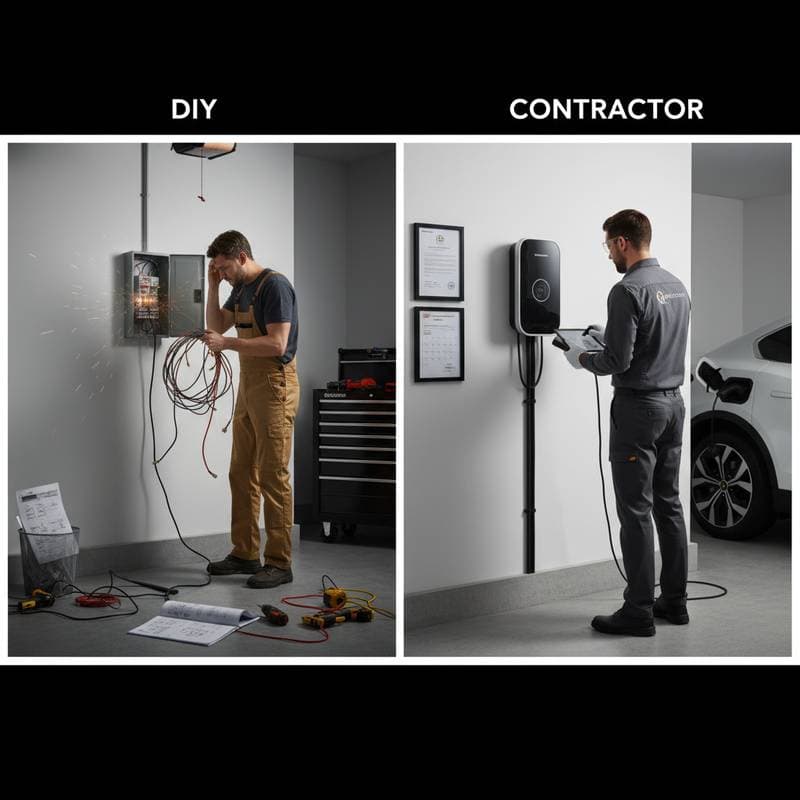
The Case for Professional EV Charger Installation Over DIY Efforts
Homeowners who acquire an electric vehicle often envision a straightforward setup for a home charger in the garage. The process involves mounting a unit and connecting wires, yet this task conceals significant electrical challenges, safety concerns, and adherence to building codes. Professional installation by a licensed electrician surpasses DIY approaches by mitigating hazards and ensuring long-term reliability.
Understanding these elements reveals why experts recommend against self-installation for most individuals. Such a decision protects both the home and the vehicle investment while complying with legal standards.
Analyzing Costs: DIY Versus Professional Approaches
Initial expenses suggest DIY as a budget-friendly option. EV chargers typically range from $400 to $900, whereas professional services add $600 to $2,000, influenced by factors like electrical panel modifications, wiring distances, and permit costs.
Deeper examination uncovers hidden expenses in DIY projects. Errors in wiring can necessitate repairs exceeding $1,000, alongside fines up to $500 per code violation or damages from electrical faults, such as fires costing thousands in mitigation. Insurance providers frequently void coverage for non-professional electrical modifications, leaving owners liable for all repercussions.
Manufacturer warranties for both the vehicle and charger often mandate certified installation. A DIY error could invalidate these protections, transforming apparent savings into substantial financial burdens during malfunctions.
Navigating Permits, Codes, and Inspections
Local electrical codes, governed by the National Electrical Code (NEC) with regional variations, require permits and inspections for EV charger setups. Professionals manage these administrative tasks, including applications and coordination with utility companies for potential service enhancements.
DIY attempts without permits invite penalties, including fines from $250 to $1,000, mandatory dismantling, or rework orders upon discovery. During home sales, undocumented electrical alterations complicate appraisals, potentially reducing value by 1-2% or delaying closings by weeks.
Documentation from a certified electrician verifies adherence to standards like NEC Article 625, which addresses EV equipment. This record facilitates smooth inspections and bolsters buyer confidence in the property's electrical integrity.
Framework for Deciding on Installation Method
Consider this structured guide to evaluate options based on specific circumstances:
-
Opt for DIY installation solely when:
-
The individual holds a valid electrician license and possesses extensive residential wiring experience.
-
The electrical panel includes an available 240-volt circuit suitable for immediate connection.
-
Confidence exists in interpreting local codes, securing permits, and passing inspections independently.
-
Select professional installation when:
-
Uncertainty surrounds the panel's load capacity or the need for upgrades like a 50-amp breaker.
-
Preservation of manufacturer warranties remains a priority.
-
Assurance of safety, full compliance, and expert handling of inspections is desired.
-
Plans involve scalability for advanced chargers, such as Level 2 units supporting up to 19.2 kW.
For the majority of homeowners, professional services eliminate uncertainties, prioritize safety, and deliver enduring results.
Safety Considerations in EV Charger Setup
Electrical systems operate at high voltages, with EV chargers drawing 30-50 amps on dedicated circuits. Improper grounding or overloaded panels can spark arcs, leading to fires that account for over 50,000 U.S. home incidents annually, per fire safety reports.
Professionals assess risks, such as voltage drops over long runs or compatibility with older wiring, installing ground-fault circuit interrupters (GFCIs) as required. These measures prevent shocks, equipment failures, and disruptions to the home's power grid.
DIY errors often stem from overlooked details, like insufficient conductor sizing (e.g., using 10-gauge instead of 6-gauge wire), which causes overheating. Expert oversight integrates surge protection and ensures the setup aligns with the vehicle's charging profile for optimal efficiency.
Long-Term Benefits of Expert Installation
A professionally installed charger enhances daily routines by providing overnight charging at rates up to 30 miles per hour, eliminating reliance on public stations. Integration with smart home systems allows scheduling during off-peak hours, reducing energy costs by 20-30%.
Maintenance involves periodic checks for cable integrity and environmental factors like humidity, which can corrode connections. Professionals often include initial tuning and follow-up advice, extending equipment life beyond 10 years.
This investment yields peace of mind, knowing the system supports future EV advancements without retrofitting needs.
Maximizing Efficiency and Performance
Efficiency hinges on proper circuit design; undersized setups limit charging speeds, extending times from 4-8 hours to overnight marathons. Electricians calculate precise amperage based on distance and load, incorporating energy-efficient components like LED indicators.
Performance monitoring through app-connected chargers tracks usage and alerts for issues, features maximized only with correct installation. Homeowners benefit from balanced electrical distribution, preventing tripped breakers during peak household demands.
Securing Your Home's Electrical Future
Professional installation fortifies the home's infrastructure for emerging technologies, such as bidirectional charging that returns power to the grid. This forward-thinking approach not only sustains current needs but also elevates property appeal in an eco-conscious market.
Homeowners gain reliable access to green mobility, with setups that withstand daily wear and environmental variables. The result is seamless integration of electric vehicles into household life, fostering sustainable practices without compromise.