
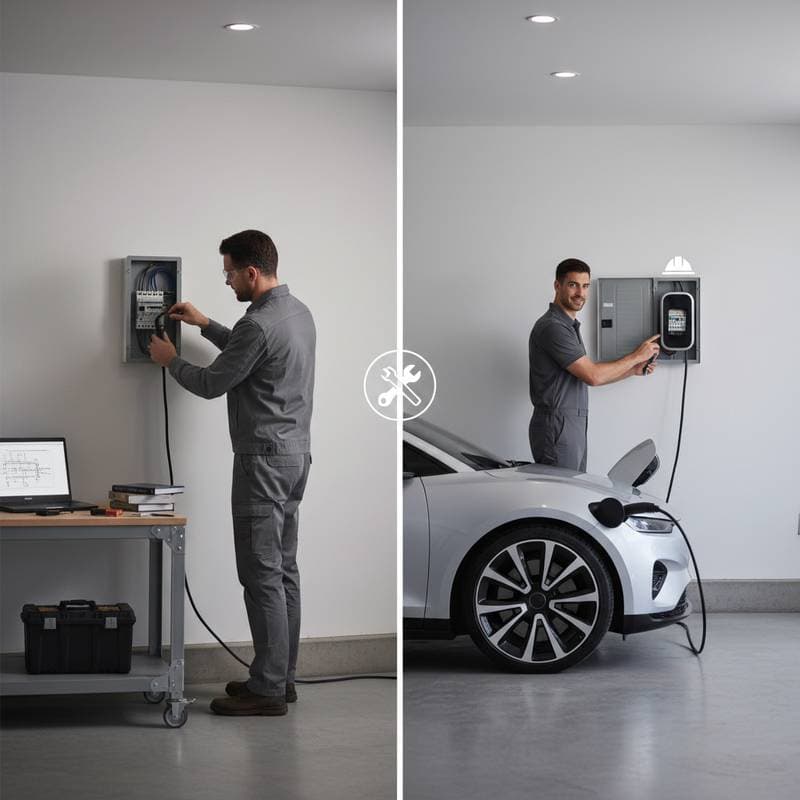
DIY or Hire a Pro for Your EV Charger Installation
If you have ever stared at your electric vehicle charging cable snaking across the garage floor, you are not alone. Adding a dedicated EV charger at home can make your daily routine smoother and more convenient. No more waiting in line at public stations or worrying about range for tomorrow commute. Once you decide to install one, the key question is whether to handle the project yourself or hire a professional electrician.
This decision involves cost, safety, and your comfort with electrical work. The sections below compare each option so you can select the approach that fits your home.
When DIY Installation Makes Sense
If you are comfortable working with electrical systems, installing the charger yourself can reduce labor expenses. Labor costs for professional service often range from 400 to 1200 dollars depending on wiring complexity and local rates. Completing the project yourself also brings satisfaction from supporting a sustainable lifestyle.
Required Tools and Materials
- A charger unit compatible with your vehicle and home electrical service.
- A dedicated 240 volt circuit from the electrical panel to the charger location.
- Wiring and conduit rated for the charger amperage, typically 40 or 50 amps.
- A double pole breaker matched to the circuit load.
- Insulated gloves, a voltage tester, and a drill for safe execution.
Installation Steps
- Verify panel capacity to confirm it can support the added load without an upgrade.
- Shut off power at the main breaker and confirm zero voltage with a tester.
- Install the new breaker according to manufacturer guidelines.
- Run approved conduit and wiring from the panel to the mounting location.
- Secure the charger to the wall and connect wires per the manual.
- Restore power and test communication with your vehicle.
Estimated DIY Costs
- Charger unit: 400 to 800 dollars.
- Wiring and materials: 75 to 200 dollars.
- Permits and inspection: 50 to 150 dollars.
- Total: approximately 525 to 1150 dollars.
Local codes usually require inspection, and improper wiring can create fire hazards. Check requirements with your building department before beginning work.
Side by Side Comparison
| Factor | DIY Installation | Professional Installation |
|---|---|---|
| Cost | 525 to 1150 dollars | 900 to 4800 dollars |
| Time | One to two days | Usually half a day |
| Safety | Relies on your experience | Backed by license and inspection |
| Permits | Homeowner responsibility | Electrician manages process |
| Warranty | May be affected | Typically remains intact |
| Complexity | Suitable with prior experience | Appropriate for any homeowner |
If your panel is modern and you possess wiring experience, DIY can be practical. Older wiring or uncertainty about capacity often makes professional installation the safer and sometimes required choice.
Safety Practices for Every Installation
Use equipment rated for the charger amperage and follow all manufacturer directions. Avoid undersized wire or skipped grounding. Stop work and consult a licensed electrician if any step feels uncertain.
When hiring help, confirm the electrician has EV charger experience and liability insurance. Retain final inspection records for future reference.
Ongoing Care and Benefits
A properly installed charger lets you recharge overnight while you rest. Home charging usually costs less than public stations and saves weekly travel time.
- Inspect connections each season for wear or corrosion.
- Clear dust and debris from the unit to maintain airflow.
- Verify GFCI protection functions correctly on a regular basis.
- Use smart features to track usage and schedule charging during off peak rates.
Placement and Planning Recommendations
Mount the charger within ten feet of your usual parking spot. Install extra conduit now if you anticipate adding a second vehicle later. Outdoor units require weatherproof enclosures. Photograph all wiring and retain permit documents for maintenance and home resale value. Check utility and government rebates that can lower net costs.
Home charging supports both convenience and long term savings while increasing property appeal.