
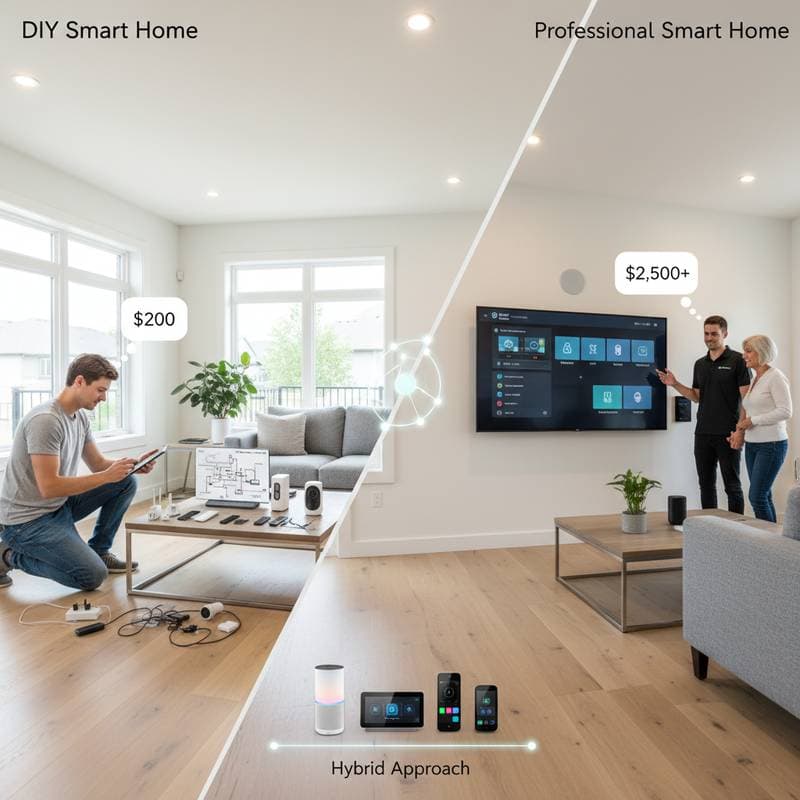
DIY Versus Professional Smart Home Installations: Costs and Key Pitfalls
Imagine entering a living room where lights activate automatically, a thermostat maintains ideal comfort levels, and a door lock unlocks upon detecting your approach. Such features promise convenience, yet achieving them involves decisions that affect budget, reliability, and ease of use. Homeowners must weigh do-it-yourself approaches against professional services to determine the best path forward.
Appeal of Do-It-Yourself Smart Home Projects
Many projects begin with a simple purchase, such as a smart bulb installed in minutes, which ignites enthusiasm for broader automation. Do-it-yourself options provide affordability, customization, and the satisfaction of hands-on involvement. Users select specific devices, define their interactions, and plan future expansions.
Basic do-it-yourself systems, featuring smart plugs, bulbs, and voice assistants, range from 200 to 1,500 dollars. Advanced configurations with security cameras, thermostats, and automated blinds can extend to 2,500 dollars or higher, based on the number of automated rooms. While costs remain lower, success demands time investment and technical proficiency to ensure seamless operation.
Individuals who value experimentation find do-it-yourself setups rewarding. They gain insights into device communication, network capabilities, and rapid troubleshooting. However, connectivity failures or software updates can disrupt routines, turning initial excitement into ongoing challenges.
Benefits of Professional Installation
Professionals become essential as projects grow complex, such as integrating devices across multiple rooms or incorporating wired elements like in-wall speakers and built-in lighting controls. Services typically cost 1,500 to 6,000 dollars, with comprehensive systems for large homes exceeding 10,000 dollars. These fees encompass design, setup, and warranties that mitigate errors and future expenses.
Beyond labor, professionals source premium equipment unavailable in standard retail, including robust routers, specialized hubs, and code-compliant security solutions. A key advantage lies in ensuring device interoperability across brands. Experts also create sophisticated automations, such as synchronizing lighting, climate, and entertainment based on user patterns.
Overlooked Expenses in Do-It-Yourself Projects
Initial do-it-yourself costs seem modest, yet additional expenses arise over time. Network demands increase with more devices, potentially causing delays or dropouts from insufficient Wi-Fi. Solutions like mesh networks or upgraded routers add 150 to 400 dollars.
Time represents another significant factor. Configuring devices, integrating apps, and resolving issues consume hours, with updates occasionally requiring full reconfiguration. Without external support, users handle all repairs independently.
Security vulnerabilities pose further risks in do-it-yourself systems. Overlooking strong passwords or two-factor authentication leaves networks exposed. Professionals address these by implementing encryption and segmentation during installation.
Frequent Challenges and Prevention Strategies
-
Device Compatibility Problems
Combining products from various manufacturers leads to integration difficulties. Although standards like Matter and Thread advance compatibility, discrepancies persist. Verify ecosystem alignment with platforms such as Alexa, Google Home, or Apple Home prior to buying. -
Dependence on Cloud Connectivity
Internet outages halt many do-it-yourself automations. Opt for devices supporting local control to maintain functionality offline. Professionals incorporate these redundancies for uninterrupted performance. -
Neglecting Electrical and Wiring Needs
Wired components demand familiarity with electrical standards. Engage a licensed electrician for any hardwiring to prevent hazards. Adhere to safety guidelines to avoid damage or code violations. -
Overlooking Privacy Protections
Devices gather data that may reach third parties. Review policies and disable excess tracking before setup. Professionals streamline these configurations, while do-it-yourself users conduct individual assessments. -
Excessive Automation Attempts
Automating too many elements risks conflicts, like untimely light activations. Begin with minimal setups, test thoroughly, and refine incrementally to achieve reliable results.
Detailed Cost Analysis
| Installation Type | Typical Cost Range | Ideal For | Common Challenges |
|---|---|---|---|
| Do-It-Yourself Starter | 200 - 1,500 dollars | Renters or beginners | Connectivity, limited coverage |
| Do-It-Yourself Advanced | 1,500 - 3,000 dollars | Technically skilled owners | Compatibility, upkeep |
| Professional Basic | 3,000 - 6,000 dollars | Reliability-focused users | Initial investment |
| Custom Full Integration | 6,000 - 10,000+ dollars | Expansive or high-end homes | Intricacy, extended setup |
This table illustrates how expenses align with expertise and performance expectations. Hybrid strategies, combining do-it-yourself for simple additions and professional aid for critical elements like security, often optimize outcomes.
Weighing Personalization Against Ease
The core decision hinges on preferences for control versus simplicity. Do-it-yourself methods allow ongoing tweaks and adaptations to emerging technologies. Professional setups emphasize dependable, cohesive operation without constant adjustments.
Tech enthusiasts thrive with do-it-yourself by initiating with basics like plugs or speakers and scaling up. Those prioritizing hassle-free use benefit from professional execution, which eliminates iterative testing.
Hybrid models gain popularity, where experts manage wiring and core programming, leaving users to handle routine modifications via user-friendly applications. This combination controls expenses while enhancing usability.
Prioritizing Safety and Regulations
Even minor smart home additions require attention to safety, especially with electrical or security integrations. Compliance with local codes prevents insurance issues or fire dangers. Use certified products and follow precise instructions for do-it-yourself efforts.
For any structural changes, involve licensed specialists. Professionals provide insured, compliant work that safeguards property and supports future home sales.
Enhancing Efficiency and Future Worth
Properly designed smart homes cut energy use through scheduled thermostats, lights, and sensors. Incompatible or inefficient setups, however, increase consumption via persistent connections. Professionals fine-tune for optimal balance, programming zones and off-peak operations.
Do-it-yourself users achieve comparable savings through diligent monitoring and adjustments. Professionally installed systems boost property appeal, as documented, warranted integrations attract buyers seeking proven reliability.
Developing Proficiency for Ongoing Projects
Treat do-it-yourself endeavors as progressive initiatives. Initiate modestly, maintain detailed records of configurations and credentials, and consult community resources for solutions. Regular tasks like firmware checks and network evaluations sustain performance.
As expansions arise, schedule professional reviews costing 200 to 500 dollars for audits or enhancements. This guidance prevents complications and supports sustained growth.