
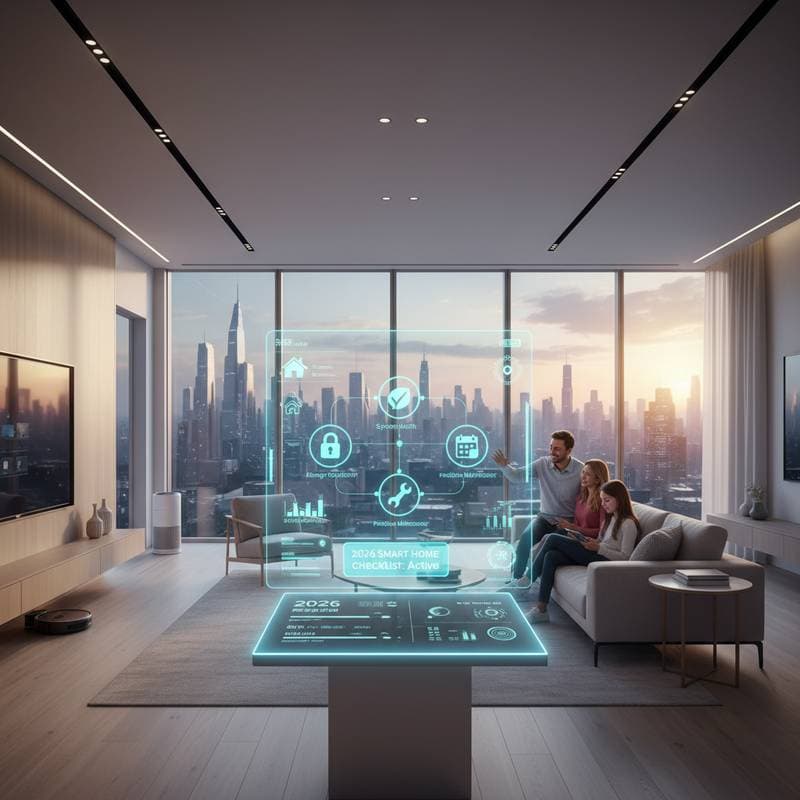
The 2026 Checklist Revolutionizing Smart Homes
Homeowners often enter their living spaces hoping for intuitive support that anticipates daily routines. Recent advancements in smart home technology reshape management of maintenance, comfort, and efficiency. This evolution centers on a core principle: automation must streamline existence without introducing digital disarray. Experts highlight the Smart Home Checklist as the key framework that imposes structure on the growing realm of interconnected devices.
This checklist integrates disparate smart devices into a cohesive network for maintenance and lifestyle enhancement. Envision a centralized dashboard that monitors filter replacements, appliance firmware updates, lighting timetables, and energy patterns, while adapting to individual behaviors. Rather than facing multiple alerts, users receive consolidated guidance that maintains optimal home performance.
The Problem: Smart Chaos in Connected Living
Smart technology progresses rapidly, yet many homeowners face challenges in efficient oversight. Devices such as thermostats and leak sensors typically function via separate applications or platforms. This fragmentation leads to digital overload akin to physical mess. Alerts accumulate, updates go unattended, and energy management falters.
Such issues foster what specialists term smart fatigue. Homes intended for ease demand ongoing vigilance instead. The Smart Home Checklist counters this by substituting reactive approaches with preventive, systems-oriented strategies. Maintenance evolves into a steady process rather than sporadic responses.
The Framework: A System Built Around Predictive Maintenance
Modern smart homes rely on predictive analytics over manual prompts. The checklist organizes the home into five essential systems:
-
Climate and Air Quality
Thermostats, air purifiers, and HVAC sensors collaborate to assess temperature equilibrium and air cleanliness. The checklist prompts filter changes based on detected airflow reductions below set thresholds, surpassing rigid calendar schedules. -
Water and Plumbing Systems
Leak detectors, humidity sensors, and intelligent valves observe pressure variations and moisture content. The checklist generates automated notifications for subtle irregularities, identifying leaks early to avert structural harm. -
Electrical and Energy Management
Smart plugs and meters evaluate instantaneous power draw, pinpointing idle devices that consume unnecessary electricity. Users schedule automated disconnections, yielding financial and environmental benefits. -
Security and Access Control
Locks, cameras, and alarms merge into a unified authentication protocol. The checklist schedules firmware installations and confirms backup battery integrity to avoid operational failures. -
Appliance and Utility Monitoring
Refrigerators, washers, and similar units transmit performance data to the checklist, which signals deviations indicating deterioration or required servicing.
These components create a dynamic document that adjusts to evolving usage data.
Implementation: How to Build Your Smart Home Checklist
Constructing a personalized checklist demands no complete overhaul. Select a central hub or ecosystem enabling device interoperability, like those compliant with Matter standards. Organize the checklist across three automation levels:
Tier 1: Basic Monitoring
Establish surveillance of core areas including HVAC, security, and water systems. Configure alerts for tasks such as filter swaps, battery inspections, and energy fluctuations. This level emphasizes foundational awareness.
Tier 2: Predictive Optimization
Incorporate analytical features via the hub or dedicated applications. Employ AI tools to examine patterns like increasing humidity or power spikes, forecasting interventions ahead of disruptions.
Tier 3: Full Automation and Self-Healing
Sophisticated setups execute automatic corrections. For instance, a thermostat sensing elevated humidity activates a dehumidifier or modifies ventilation without user input.
This progression shifts the home toward proactive functionality, minimizing time and expense on upkeep.
Cost and ROI: Smart Spending for Long-Term Savings
Setup expenses fluctuate based on residence scale and current setups. A foundational array of sensors, plugs, and a hub ranges from $400 to $800. Comprehensive predictive features might total $2,000 to $5,000, influenced by selections and integration demands.
Benefits materialize quickly. Optimized energy routines reduce utility expenses by 10 to 25 percent. Prompt leak identification avoids thousands in repair fees. Anticipatory care prolongs appliance durability, lowering renewal outlays.
For phased adoption, target high-impact areas first. HVAC enhancements, water surveillance, and intelligent lighting offer swift payback through tangible gains.
Safety and Professional Boundaries
The checklist facilitates self-directed control, but certain elements necessitate expert involvement. Upgrades to electrical panels, power distribution, and plumbing sensors must comply with regional codes. Confirm system compatibility prior to deployment.
On cybersecurity, implement secure Wi-Fi with encryption, two-factor verification, and routine firmware refreshes. A breached hub exposes the entire residence, making digital safeguards essential alongside physical care.
Troubleshooting Common Issues
Automated frameworks benefit from regular evaluations. Frequent challenges encompass:
- Connectivity Drops: Devices losing links often stem from weak router signals or appliance interference. Relocate equipment or upgrade networks to resolve.
- False Alerts: Adjust sensors for ambient conditions, such as local humidity baselines, to minimize inaccuracies.
- Over-Automation: Excessive rules may cause cycles, like flickering lights. Refine configurations in the hub to eliminate redundancies.
Quarterly audits ensure sustained reliability for most users.
The Broader Impact: Data-Driven Home Habits
The checklist surpasses mere utility by cultivating a holistic perspective. Homeowners view residences as interconnected systems over standalone gadgets. Performance logging reveals how tweaks in lighting or humidity influence well-being and expenditures.
This approach promotes ecological awareness. Precise resource allocation curtails excess and advances green practices. As standards unify, future expansions become straightforward.
Integrating the Checklist into Daily Routines
With the checklist in place, it operates unobtrusively. Automated dawn lighting syncs with natural light, while upkeep prompts surface only as needed.
Maintain effectiveness by reviewing automation rules seasonally. Incorporate emerging devices thoughtfully to preserve harmony.
Pro Tips for Success
- Start Small: Master one domain, like HVAC tuning, to grasp automation's comfort and efficiency boosts.
- Centralize Controls: Adopt a unified interface for all oversight, easing diagnostics and family access.
- Track Metrics: Log power consumption, thermal consistency, and service timelines to quantify returns.
- Plan for Upgrades: Opt for adaptable protocols and enduring support in device choices.
- Stay Secure: Update credentials from defaults and apply patches to counter threats.
Advancing Toward an Intuitive Home
The Smart Home Checklist represents a practical blueprint for enhanced efficiency, security, and sustainability. Unified communication across home elements preempts issues, fostering prevention over reaction. Ultimately, this yields a residence that adapts intuitively, optimizing life for the demands ahead.