
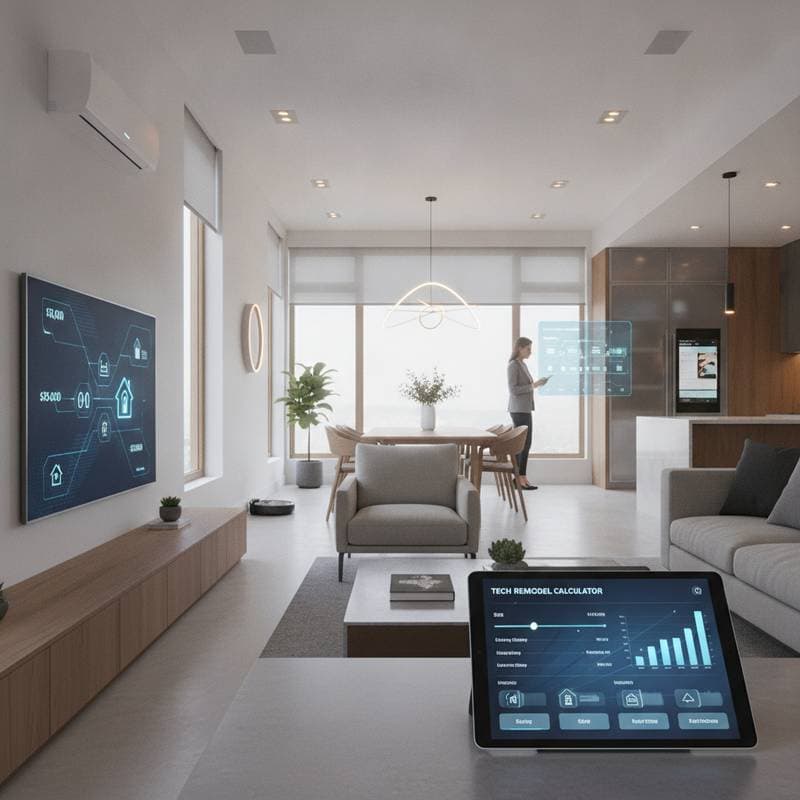
Quickly Estimate 2026 Smart Home Integration Costs
Homeowners today often begin with isolated smart devices such as speakers or thermostats. Full integration requires planning that accounts for devices, labor, and infrastructure. Costs typically range from several thousand dollars for moderate projects to much higher amounts for luxury installations.
Key Cost Factors at a Glance
- Average full home integration ranges from $6,000 to $25,000 based on complexity and square footage.
- Single device additions begin around $100 while complete luxury packages may exceed $50,000.
- DIY approaches reduce labor expenses yet demand more personal time for configuration.
- Professional work provides reliable coordination across systems and stronger long term performance.
- Energy savings and added resale value frequently recover a portion of the initial outlay.
Understanding Real Project Costs
Entry level upgrades usually involve one or two devices. A smart thermostat combined with several voice controlled lights falls between $300 and $600. These starter projects need little or no rewiring.
Mid tier installations that link lighting, security, and climate control generally cost $6,000 to $12,000. This level includes a central hub and professional setup across multiple rooms. Larger properties with entertainment controls and motorized window treatments often reach $25,000 or more.
Device and Hardware Expenses
Hardware forms the foundation of any system. Prices depend on brand features and the total number of units.
- Lighting packages range from $200 for basic dimming to $2,500 for whole home color systems.
- Thermostats cost $100 to $350 and include usage reports that support lower utility bills.
- Smart locks run $150 to $600 per door when professional fitting is included.
- Camera and sensor kits span $300 to $2,000 for complete property coverage.
- Hubs and voice assistants fall between $100 and $500 according to processing power.
Energy efficient choices in this category commonly return their cost through reduced monthly bills within three years.
Installation Choices and Labor Rates
Labor represents a major variable. DIY installation keeps direct costs near zero beyond minor accessories yet requires technical comfort.
Professional installation averages $75 to $150 per hour. Mid sized projects usually total $1,000 to $5,000 in labor. Complex custom programming for hidden wiring can add $10,000 or higher.
Network Upgrades Required for Stability
Reliable connectivity prevents dropped commands and slow responses. Basic router improvements cost $150 to $600. Mesh systems for larger homes run $300 to $800. Hardwired Ethernet adds $2 to $4 per foot when maximum stability matters.
Ongoing Service and Maintenance
Regular updates protect security and function. Cloud storage subscriptions range from $5 to $30 monthly. Battery changes and minor repairs average $50 to $200 each year. Professional troubleshooting visits cost $100 to $300 when needed.
How Size and Daily Routines Shape Budgets
Small apartments reach full automation for less than $5,000. Larger homes with outdoor controls often require $20,000 or above. Remote workers tend to emphasize lighting and climate zones. Families usually prioritize entry monitoring and motion alerts.
Comparing DIY and Professional Routes
DIY work offers schedule flexibility and lower immediate expense. It also builds personal familiarity with every component. Drawbacks include possible brand conflicts and extended setup time.
Professional service delivers coordinated performance and stronger security. It reduces future troubleshooting yet raises upfront cost and may limit later modifications. Many owners choose a mixed path by handling simple rooms themselves and outsourcing security or HVAC links.
Regional Price Differences
Labor rates vary by location. Urban technicians charge $100 to $150 per hour while suburban rates fall between $75 and $120. Rural projects sometimes incur extra travel fees. Local rebates for energy management devices can shorten payback periods.
Planning for Lasting Property Value
Integrated homes frequently sell for 3 to 5 percent more than similar non automated properties. Open platforms that accept multiple brands protect future flexibility. Documenting network settings and automation routines simplifies handover to new owners.
Security Practices That Protect Data
Every connected device creates a potential entry point. Strong unique passwords and regular firmware updates reduce risk. Separating cameras onto their own network segment adds another layer of protection. A professional network review costs $150 to $400 and provides added assurance.
Frequent Planning Errors to Prevent
- Purchasing devices without first confirming shared communication standards.
- Underestimating router capacity for the final device count.
- Omitting precise calibration on climate and security components.
- Neglecting backup power for critical locks and sensors.
- Selecting closed systems that hinder future expansion.
Budget Tiers That Match Different Homes
Basic packages between $1,000 and $3,000 suit apartments and first projects. Intermediate work from $6,000 to $12,000 fits most mid sized houses. Comprehensive systems from $20,000 to $50,000 serve large properties that require unified control of every subsystem.
Reserve 15 to 20 percent of the total budget for network improvements and later additions.
Practical Steps for Smooth Execution
Select one primary ecosystem before purchasing devices. Test each room thoroughly before expanding further. Keep written records of passwords, IP addresses, and routine settings. Schedule brief performance reviews every few months to maintain efficiency.