
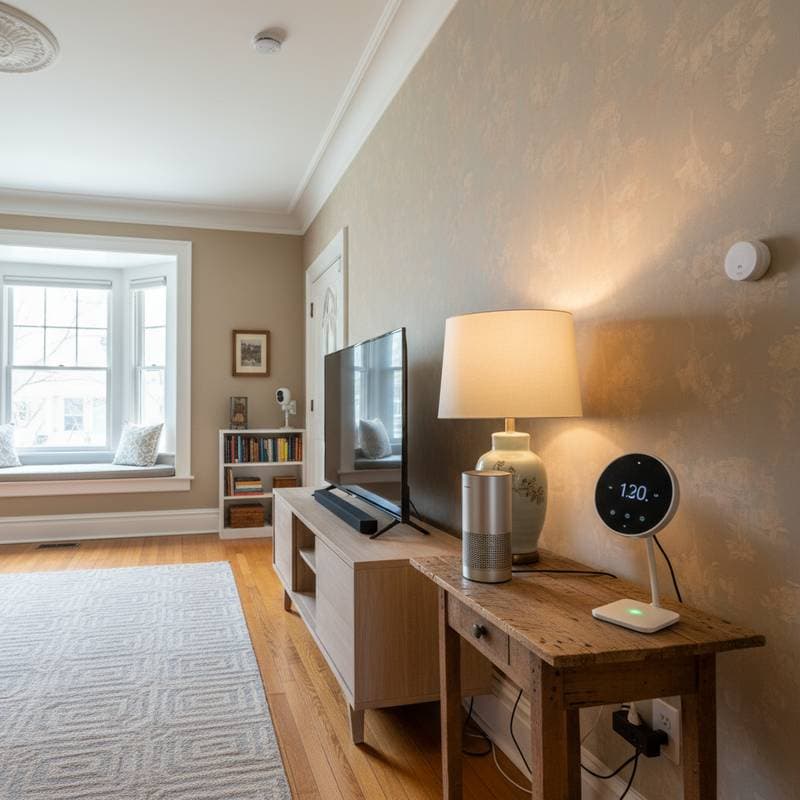
Retrofit Old Homes: Smart Tech Upgrade Essentials
Homeowners often cherish the unique craftsmanship of older properties while desiring the benefits of contemporary smart technology. These benefits include enhanced convenience, improved energy efficiency, and heightened safety. Fortunately, integrating smart features into vintage homes is achievable without extensive renovations or costly rewiring. A strategic approach allows preservation of architectural character alongside practical modern enhancements.
Understanding the Retrofit Challenge
Older structures typically lack the infrastructure for wireless networks, automated systems, or sensor-based devices. Challenges such as dense plaster walls, obsolete electrical systems, or scarce outlets can complicate installations. Current solutions, however, minimize these issues by avoiding invasive modifications.
Begin by defining specific objectives, such as optimizing energy use, strengthening security, or simplifying routines through automation. These priorities shape device selections. For example, a smart thermostat maintains ideal temperatures to reduce utility costs, and automated lighting enhances both security and ease of access.
Homes with knob-and-tube wiring or outdated fuse panels necessitate consultation with a qualified electrician prior to introducing power-intensive devices. Electrical safety remains paramount. With an assessment of capacity limits, a tailored upgrade strategy emerges.
Lighting Solutions Compatible with Legacy Wiring
Traditional smart lighting installations often involved replacing wall switches or fixtures, a process ill-suited to historic homes. Modern alternatives include bulbs, plugs, and adhesive wireless controls that integrate effortlessly.
Smart Bulbs
These provide a straightforward option, particularly for temporary setups or rental situations. Brands like Philips Hue or Sengled fit into existing sockets and link via a central hub or direct Wi-Fi connection. Users control dimming, scheduling, and color variations through a mobile application.
Smart Plugs
Devices from TP-Link or Amazon enable remote operation of lamps and minor appliances. Schedule activations or issue voice commands to manage power remotely, promoting energy conservation.
Wireless Smart Switches
For those preferring conventional controls, battery-operated switches adhere over current plates without electrical alterations. Their design blends seamlessly with period interiors.
Costs range from $15 to $60 per unit, varying by manufacturer and capabilities. Installation per room requires 10 to 30 minutes. Such enhancements deliver immediate usability without compromising aesthetic integrity.
Thermostats and Energy Management Strategies
Smart thermostats represent a cornerstone of efficiency upgrades, learning user patterns to adjust heating and cooling automatically. Models from Nest or Ecobee connect wirelessly and integrate with broader home systems, often requiring no wiring changes beyond a common wire adapter if needed.
Complement these with smart plugs and power strips that monitor and interrupt standby power to electronics. Sensors detect occupancy to optimize usage further. In homes with aged windows or thin insulation, automated blinds from Somfy or Lutron respond to temperature data, shading interiors during peak sun and opening at dusk.
Estimated expenses include $20 to $50 for plugs and $100 to $300 for blinds per window. These measures foster substantial reductions in energy bills and elevate overall comfort.
Security and Safety Enhancements
Protecting an older home involves layering smart devices that alert to intrusions or hazards without structural interventions. Battery-powered door locks from August or Schlage retrofit over existing hardware, allowing keyless entry via app or code.
Wireless cameras, such as those from Ring or Arlo, mount externally and stream footage to smartphones, deterring threats through motion-activated lights and notifications. For fire and carbon monoxide detection, interconnected smart alarms from First Alert link to central hubs, ensuring whole-home alerts.
Integration with existing doorbell systems via overlays avoids drilling. Costs typically span $50 to $200 per device. These additions provide peace of mind while respecting original features.
Connectivity Solutions for Challenging Structures
Reliable signal transmission poses a primary hurdle in retrofits, as masonry or lath-and-plaster barriers attenuate Wi-Fi. Evaluate coverage by using a smartphone app to map signal strength across rooms. Mesh networks from Eero or Google Nest deploy satellite nodes to blanket the property uniformly.
For reduced Wi-Fi dependency, select devices employing Zigbee, Z-Wave, or Thread standards. These protocols form dedicated mesh networks, offering superior reliability and encryption in dense-walled environments. A compatible hub, like Samsung SmartThings, unifies operations.
Initial setup involves placing nodes strategically, often in 30 to 60 minutes. Long-term, this foundation supports expansion without signal frustrations.
Engaging Professional Expertise
Certain initiatives suit independent efforts, yet others demand certified professionals. Avoid self-installing wired components in homes with ungrounded systems or ambiguous circuits. Electricians assess and upgrade as necessary to prevent hazards.
For comprehensive automation encompassing lighting, climate, and security, certified integrators craft interoperable setups. Professional involvement, at $75 to $150 hourly based on location and complexity, averts future complications.
DIY-appropriate tasks encompass plugs, bulbs, locks, and sensors. Reserve rewiring or circuit modifications for specialists.
Strategies for Effective Implementation
Initiate with a single category, like illumination or climate regulation, to test compatibility before scaling. Verify cross-device harmony within ecosystems such as Amazon Alexa, Google Assistant, or Apple HomeKit.
Document installations meticulously, noting locations and reset procedures. Employ smart power strips to consolidate outlets and mitigate overload risks.
Elevate safety by modernizing detectors prior to automation. A gradual rollout harmonizes innovation with heritage, yielding a resilient, intuitive living space.
Realizing Benefits in Daily Life
A well-executed retrofit transforms routine interactions, from remote pre-heating arrivals to automated evening routines that secure the perimeter. Energy savings accrue steadily, offsetting initial outlays within one to two years. Ultimately, this blend of tradition and technology enriches homeownership, delivering security, efficiency, and delight without erasure of cherished elements.