
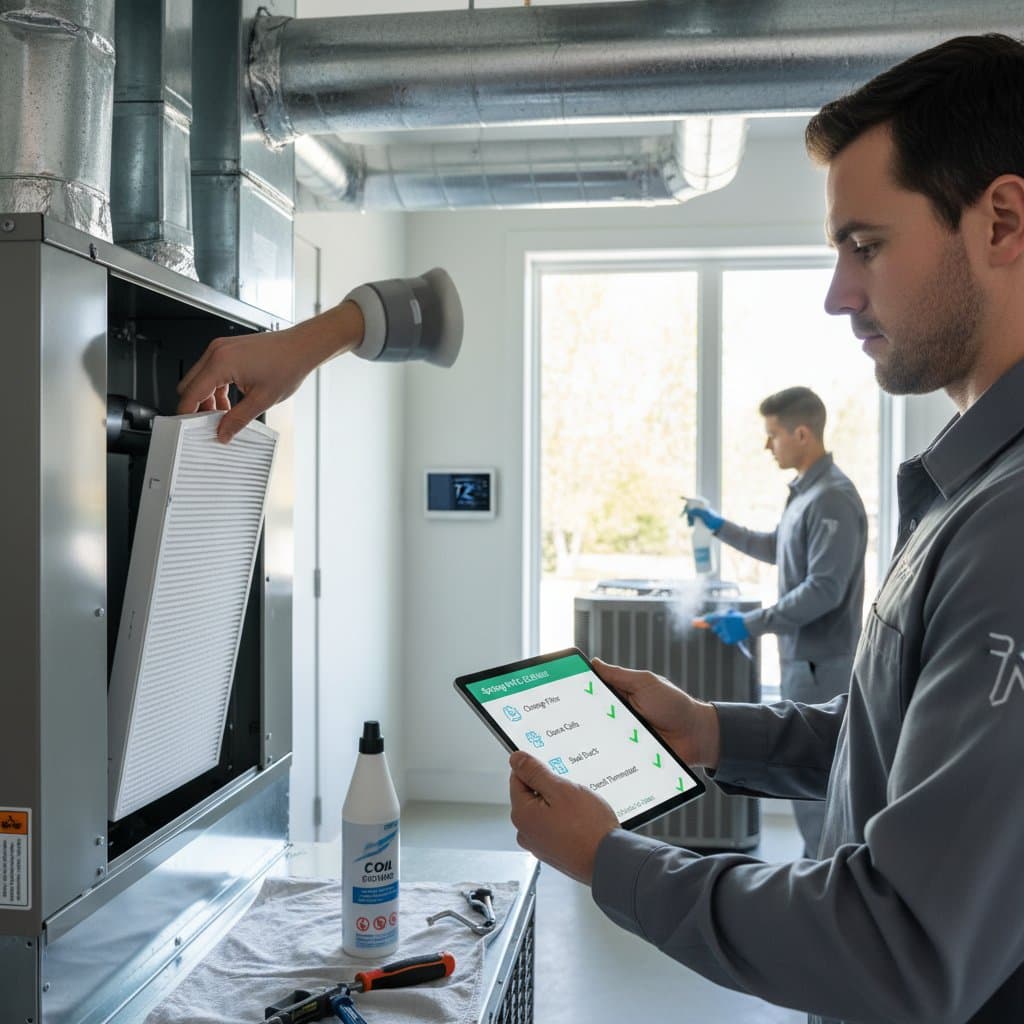
Spring HVAC Maintenance That Lowers Energy Bills
You do not need to wait for your air conditioner to fail during peak summer heat before addressing your HVAC system. Spring offers an ideal window to prepare for warmer weather, reduce energy expenses, and prolong equipment lifespan. Targeted inspections and cleanings deliver measurable improvements in both comfort and operating costs.
Homeowners who have experienced surprise increases in summer utility bills will find this guide particularly useful. It combines straightforward do it yourself procedures with professional recommendations to ready the system for reliable operation.
Replace Filters and Ensure Proper Airflow
The HVAC system performs only as effectively as its ability to circulate air. A dirty filter increases strain on the blower motor, raising energy consumption and potentially reducing the unit lifespan.
Check filters monthly during periods of frequent use. Replace pleated filters every one to three months. Washable filters require complete rinsing and drying prior to reuse. Quality replacements typically cost between ten and thirty dollars.
Examine all vents and registers throughout the home. Confirm they remain unobstructed and free of dust. Vacuum covers and inspect nearby duct sections with a flashlight. Heavy buildup or signs of mold warrant professional duct cleaning, which generally costs between three hundred and six hundred dollars.
Maintain the Outdoor Condenser Unit
Debris often accumulates around the outdoor unit as winter ends.
Disconnect power at the service switch. Clear vegetation within a two foot radius. Clean fins using a vacuum with a soft brush or low pressure water from a hose. Avoid high pressure washing to prevent fin damage.
Straighten any bent fins with a fin comb. This adjustment enhances heat transfer. A reusable comb costs less than twenty dollars.
Verify that the support pad sits level. An uneven surface stresses refrigerant lines. Minor adjustments with added gravel cost under one hundred fifty dollars. Major shifts require technician assistance.
Evaluate and Upgrade the Thermostat
Test cooling mode by setting the temperature several degrees below the current room reading. The system should activate promptly. Inspect breakers and batteries if startup fails.
A programmable or smart thermostat learns usage patterns and enables remote adjustments. Units range from one hundred to three hundred dollars and can lower annual energy use by ten to twenty percent.
Seal Ductwork and Balance Air Distribution
Leaky ducts undermine even the most efficient equipment by allowing conditioned air to escape.
Feel along accessible ducts while the system runs to detect escaping air. Apply mastic sealant or foil tape to small openings. Standard duct tape fails quickly and should be avoided.
Persistent room to room temperature variations call for professional air balancing. This service identifies hidden issues and costs between two hundred fifty and five hundred dollars.
Arrange Professional Servicing
A technician visit each spring remains essential despite regular homeowner efforts. Specialized testing covers refrigerant charge, electrical components, and overall performance.
Service includes coil cleaning, component checks, pressure verification, motor inspection, calibration, and lubrication. Fees average one hundred to two hundred dollars. Maintenance agreements often bundle visits with scheduling priority.
Documented professional care supports warranty compliance and local code adherence.
Enhance Home Insulation and Ventilation
Building envelope conditions directly influence HVAC demands.
Inspect and seal gaps at attic accesses, windows, and doors. Add insulation to attics and walls as needed. Exhaust fans in wet areas should be cleaned and verified to vent outdoors properly.
Clear Condensate Drains
High humidity increases moisture removal through the drain line, which can become blocked.
Flush the line with warm water mixed with mild detergent followed by clean water. Vinegar helps control algae. Confirm condensate pumps operate through full cycles.
Monitor System Performance
Maintain logs of all filter replacements, service calls, and repairs. These records support warranty claims and property transactions.
Ceiling fans distribute air effectively, permitting a higher thermostat setting. Set calendar reminders for recurring tasks. Review monthly energy statements for unexpected changes that may indicate developing issues.
Realize Ongoing Efficiency Gains
Consistent attention to the HVAC system protects household comfort while minimizing unnecessary energy consumption. Proper preparation ensures quiet and dependable cooling when temperatures rise.