
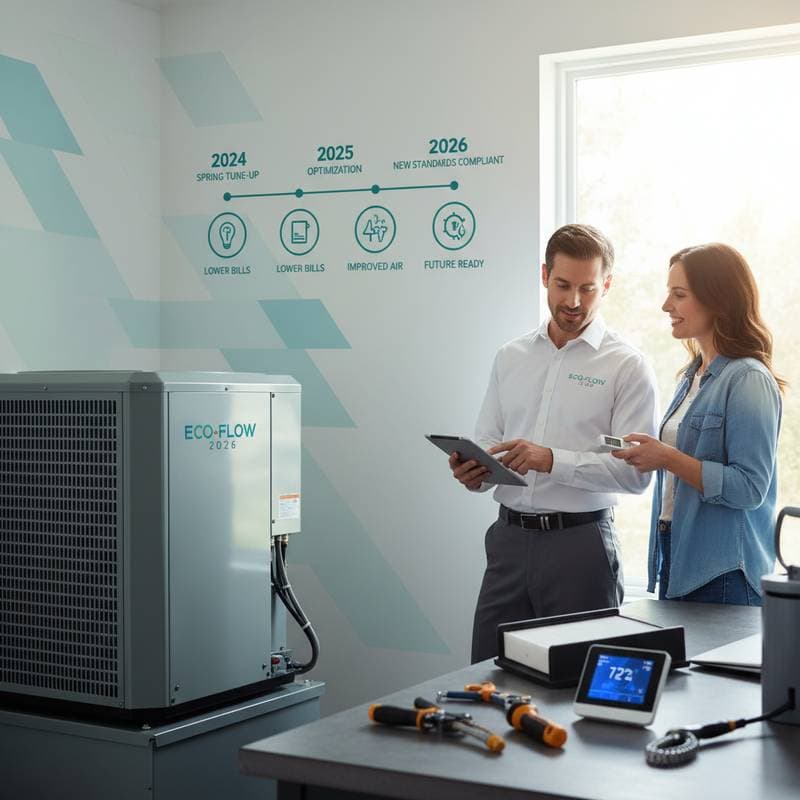
Prepare for 2026 HVAC Regulations with Spring Tune-Ups
Rising energy bills signal that many heating and cooling systems operate below optimal efficiency. Homeowners face upcoming regulations that demand higher performance from HVAC equipment. This spring provides an opportunity to assess and enhance systems, reduce costs, and align with new standards through targeted maintenance and upgrades.
Essential Insights on Upcoming Changes
- Efficiency standards for HVAC systems increase in 2026, requiring units to achieve superior energy performance.
- Mild spring weather facilitates maintenance scheduling without the urgency of seasonal extremes.
- Targeted tune-ups and modifications yield efficiency gains of 10 to 30 percent.
- Proactive measures prevent costly repairs during high-demand summer periods.
Implications of 2026 Regulations for Homeowners
These updates prioritize energy conservation and lower environmental footprints. Manufacturers must produce compliant equipment, which affects residential systems by promoting reduced energy consumption for consistent comfort. Homeowners benefit from lower utility expenses as efficient units require less power.
Older installations risk obsolescence, with scarce replacement parts and phased-out refrigerants. Proactive spring actions allow control over expenses and ensure reliable performance, avoiding reactive decisions during system failures.
Evaluate Your System's Efficiency
Locate the SEER rating on your HVAC unit to gauge cooling efficiency; ratings span from 14 to 21 or above in current models, with higher values indicating better performance. Units below emerging minimums consume excess electricity despite functionality.
Consult the yellow EnergyGuide label or equipment manual for details. Systems nearing 10 to 15 years of service warrant consideration for replacement with advanced models, which reduce energy use by up to 25 percent and yield substantial annual savings.
Spring Maintenance Steps
Homeowners can perform initial checks to enhance system operation before professional involvement.
- Replace or clean the air filter to maintain unrestricted airflow; inspect monthly and renew every 60 to 90 days.
- Clear debris, such as leaves and dirt, from a two-foot perimeter around the outdoor unit to support proper ventilation.
- Ensure vents and registers remain unobstructed by furnishings or fabrics for uniform air distribution.
- Verify thermostat functionality and explore programmable models that optimize settings during absences.
- Monitor for atypical sounds like rattling or hissing, which may indicate mechanical or refrigerant concerns.
These tasks require minimal time yet deliver measurable improvements in efficiency.
Professional Service Recommendations
Licensed technicians handle complex diagnostics and adjustments. A standard tune-up ranges from 100 to 200 dollars based on location, offering significant return through extended equipment life.
Technicians perform refrigerant level checks for leaks, coil and blower cleaning, electrical inspections, and airflow measurements with thermostat calibration. Such services validate warranties and inform decisions on repairs versus replacements for aging units.
Planning Efficiency Enhancements
Compare SEER ratings and available incentives when considering upgrades. Central air installations for high-efficiency units cost 4,000 to 8,000 dollars, offset by rebates and tax credits from utilities or government programs.
Incremental improvements, such as enhanced air handlers, sealed ducts, or added insulation, provide effective alternatives. Duct sealing alone minimizes energy loss by up to 20 percent, while attic insulation eases system workload.
Environmental and Safety Priorities
Regulations promote refrigerants with reduced global warming potential, necessitating compatible hardware. Systems reliant on legacy refrigerants require evaluation for conversions or timely replacements.
Select certified professionals for refrigerant management to protect equipment and the environment. Verified contractors provide certification proof and comprehensive post-service documentation.
Optimal Scheduling for Maintenance
Spring balances comfortable conditions with availability, reducing wait times and costs compared to peak seasons. Early interventions detect issues before summer stresses emerge.
In humid or pollen-heavy areas, timely cleaning of coils and filters enhances air quality, mitigating allergen spread during allergy seasons.
Strategies for Sustained Performance
- Close blinds during intense sunlight to limit interior heat buildup.
- Employ ceiling fans to promote air circulation and lessen system demands.
- Inspect window and door seals quarterly to curb drafts.
- Arrange biannual professional inspections for peak reliability.
These practices sustain efficiency and comfort year-round.
Securing Long-Term Benefits
Investments in HVAC maintenance and upgrades yield enduring savings and reliability. Compliance with 2026 standards positions homes for energy independence and environmental responsibility. Regular attention ensures systems deliver consistent performance, enhancing daily living without unexpected interruptions.