
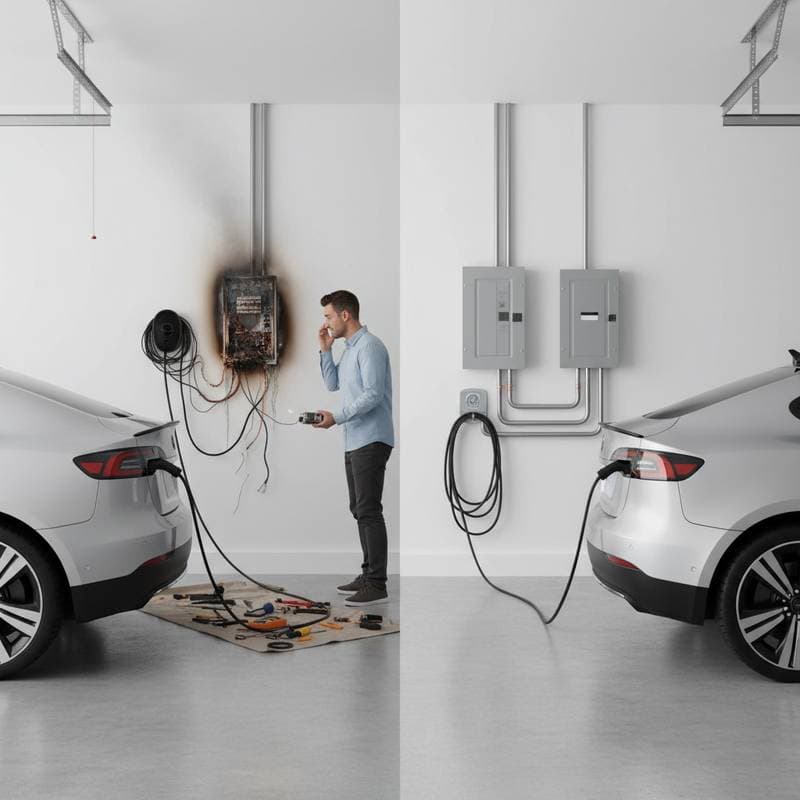
Why DIY EV Chargers Shock Your Home and Budget
The decision to install an electric vehicle charger yourself appears straightforward at first glance. Compact units arrive with instructions, and online videos simplify the steps. However, these resources often overlook critical electrical hazards, complex permitting processes, and escalating long-term expenses that threaten both your home and finances.
Unless you hold a license as an electrician with expertise in residential wiring and load management, professional assistance remains essential. This guide explores the risks of DIY approaches and highlights compliant alternatives that protect your property, budget, and well-being while enabling reliable EV charging.
Essential Considerations
- DIY installations frequently breach local electrical codes and invalidate homeowner insurance policies.
- Professional services range from 600 to 2,000 dollars, influenced by panel upgrades and wiring paths.
- Permits and inspections prove required in nearly all areas; evasion invites fines or complications during home sales.
- Faulty setups risk electrical overloads that harm appliances or ignite fires.
True Expenses of a Budget DIY Project
A standard Level 2 charger requires 30 to 50 amps, exceeding the capacity of typical household circuits like those in kitchens. Without sufficient panel support, breakers trip frequently, and internal wires overheat. Although the charger itself costs 400 to 800 dollars, experts assess panel compatibility to prevent such issues.
Factor in materials such as conduit, wiring, and permit fees, and installations total 600 to 2,000 dollars. Homes needing panel expansions or dedicated circuits see costs climb to 3,000 dollars or higher. Initial savings from self-installation vanish quickly if errors demand repairs that exceed original expenditures.
Importance of Permits and Regulations
Local authorities enforce electrical standards to govern charger integrations with home systems. These rules prevent melted connections, circuit shorts, and voltage issues that harm vehicles. Certified electricians navigate these requirements, ensuring circuits operate within safe limits.
Homeowners must secure a residential electrical permit prior to any work, including garage setups. Inspectors confirm appropriate wire gauges for amperage and verify charger positions align with safety guidelines. Unpermitted changes surface during home sales, as buyers' inspections identify them as liabilities.
Concealed Risks in Self-Performed Electrical Tasks
Much of electrical work conceals itself within walls, masking errors until problems escalate. Selecting incorrect wire sizes or breakers leads to undetected overheating that may ignite insulation. A faulty ground connection generates shock risks with each vehicle plug-in.
Load imbalance poses another threat. Electrical services maintain finite capacities; excessive draws from chargers cause voltage drops affecting electronics or prompt breaker interruptions. Accurate load assessments demand technical proficiency beyond most homeowners' reach.
Effects on Insurance and Warranties
Manufacturers specify that non-professional installations nullify product warranties. Insurers typically reject claims tied to unlicensed modifications, leaving you liable for fire damages from a DIY charger. Documented professional work establishes compliance records that safeguard against future incidents.
Utility companies provide rebates for verified professional installations, often worth hundreds of dollars. Forfeiting these opportunities compounds the financial drawbacks of skipping experts.
Situations Requiring Expert Intervention
Older homes with undersized panels or legacy wiring necessitate professional evaluation without exception. Specialists determine if Level 2 charging suits your setup or if Level 1 suffices for slower needs. They establish isolated circuits to shield chargers from competing appliances.
Experts address grounding, bonding, and surge safeguards, vital for chargers vulnerable to power fluctuations. Such protections preserve equipment and extend battery longevity against spikes.
Indicators of Potential Installation Challenges
Evaluate these factors before purchasing a charger to identify when professionals become indispensable:
- Recurrent breaker activations throughout the home.
- A main panel under 200 amps.
- Absence of breaker slots for additions.
- Presence of aluminum or fabric-insulated wiring.
- Corrosion evident on electrical fixtures.
Proceeding under these circumstances heightens dangers beyond mere inconvenience.
Strategies for Cost-Effective Professional Setup
Approach EV charger projects akin to significant renovations by obtaining quotes from at least three licensed electricians. Inquire if proposals cover permits, wiring, and load analyses. Bundled services often streamline permitting and inspections for efficiency.
Practical Recommendations for Optimal Results
- Select charger sites to minimize wiring distances, lowering expenses and efficiency losses.
- Opt for units designed for exterior mounting, featuring sealed enclosures and ground fault protection.
- Mark breakers post-installation to facilitate troubleshooting.
- Arrange regular checks to monitor wiring integrity and connections.
- Retain all paperwork for warranty support and property transactions.
Sustaining Charger Performance
Professional installations simplify upkeep, yet vigilance ensures longevity. Examine cables monthly for damage, wipe connectors dry, and watch for erratic lights indicating faults.
As EVs advance, integrate your electrical infrastructure thoughtfully. Prioritizing professional standards delivers secure, dependable charging that aligns with vehicle maintenance, avoiding disruptions like unexpected outages.
Professional execution guarantees compliance, preserves coverage, and supports seamless routines with a ready-to-go vehicle each day.