
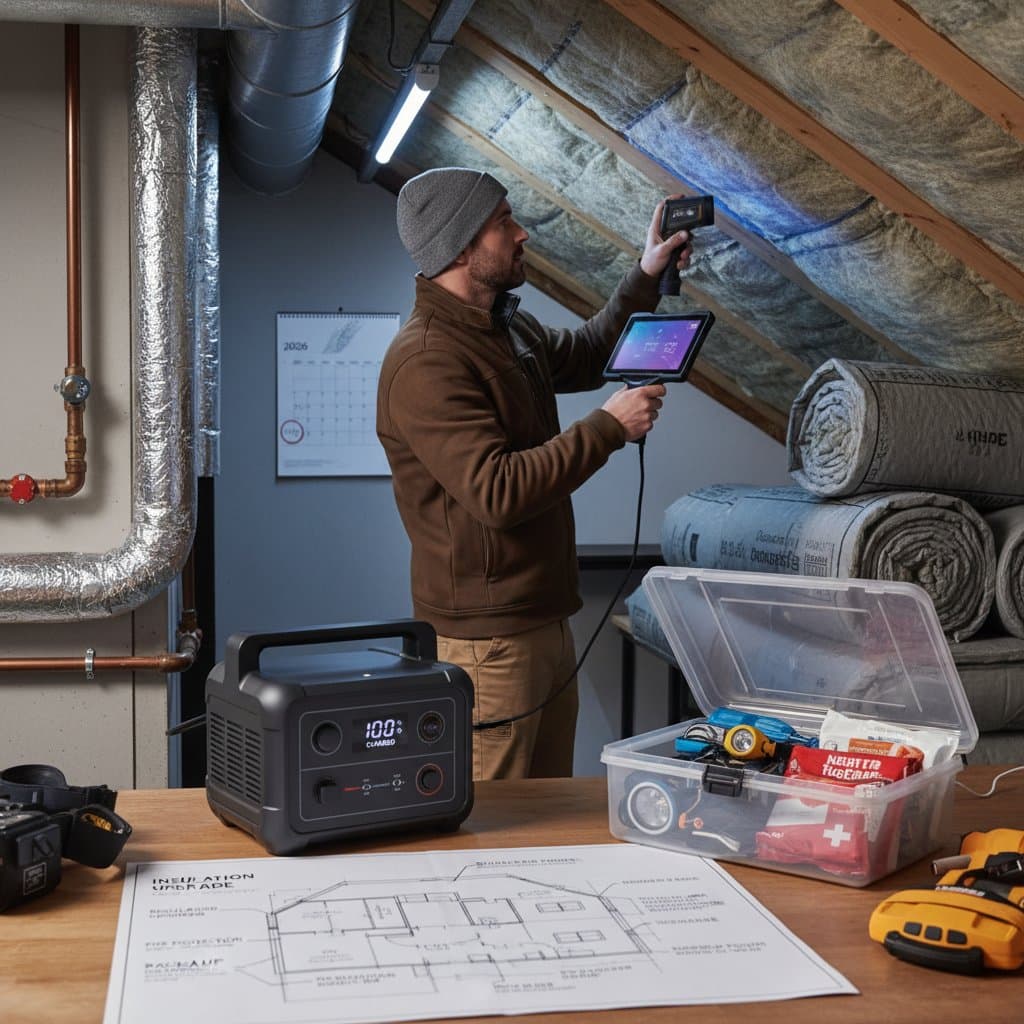
If you find more than a few red flags, bring in a licensed home inspector. A full inspection usually runs between $300 and $600 but can reveal hidden vulnerabilities that DIY checks might miss.
Step 3: Safeguard Plumbing Systems
Frozen pipes are one of the most common and costly winter emergencies. When water freezes, it expands, which can burst pipes and flood your home. The repair costs can easily exceed several thousand dollars.
Preventive Measures
- Pipe Insulation: Use foam pipe sleeves or heat tape on exposed pipes. Material costs are low, averaging under $2 per foot.
- Drip Strategy: On particularly cold nights, let faucets drip slowly to keep water moving through the system.
- Shutoff Valves: Know where your main water shutoff is and test it. A corroded valve can fail when you need it most.
If you plan to be away from home, keep your heat set no lower than 55 degrees and open cabinet doors under sinks to allow warm air circulation.
Step 5: Prepare for Power Outages
Storm-related outages can last hours or even days. Having a reliable backup plan keeps your household safe and comfortable.
Backup Power Options
- Portable Generator: Costs range from $600 to $2,500 depending on capacity. Keep it outdoors and at least 20 feet from doors or windows to prevent carbon monoxide buildup.
- Whole-House Generator: A permanent standby unit costs between $6,000 and $12,000 installed but powers your entire home automatically.
- Battery Power Stations: Compact and quiet, these are ideal for charging devices or running small appliances during shorter outages.
Safety Reminder
Never operate a generator indoors or in an enclosed porch. Use heavy-duty extension cords rated for outdoor use, and store extra fuel safely in approved containers.
Step 7: Build a Winter Emergency Kit
Preparation extends beyond home structure. Your household should have supplies ready to sustain everyone if travel becomes impossible for several days.
Essential Supplies
- Flashlights, headlamps, and extra batteries
- Non-perishable food and bottled water for at least three days
- Battery-powered or hand-crank radio for updates
- Blankets, sleeping bags, and warm clothing
- First-aid kit with prescription medications
- Cell phone power banks
- Pet food and necessary supplies
Store your kit in a waterproof container in an easily accessible location. Check expiration dates annually and rotate supplies as needed.
Step 9: Plan for Safe Heating
Heating system failure in the middle of a storm can quickly turn dangerous. Schedule a professional inspection of your furnace or boiler before cold weather arrives.
Maintenance Steps
- Replace filters to improve efficiency and air quality.
- Check chimney flues for blockages or creosote buildup.
- Install carbon monoxide detectors near sleeping areas.
If you rely on space heaters, choose models with automatic shutoff features and never plug them into extension cords. Keep them at least three feet away from flammable materials.
Pro Tips for Success
- Schedule inspections early to avoid seasonal contractor delays.
- Use smart home sensors to monitor temperature and humidity remotely.
- Trim nearby tree branches that could break under snow weight.
- Label your electrical panel clearly so you can shut off circuits during an emergency.
- Keep a snow shovel and ice melt near entrances for quick access after storms.
Even small actions like these give you control when conditions outside are unpredictable.
Maintaining Your Investment
Once you complete your winter readiness checklist, the work does not end there. Recheck seals, insulation, and emergency supplies midway through the season. After each storm, walk your property to look for new damage or potential hazards. Keeping up with these inspections ensures your home remains protected not only for this winter but for many seasons to come.
With thoughtful preparation, your home can stand firm against the harshest winter storms. You will sleep easier knowing that frozen pipes, power outages, and structural issues are already accounted for. That peace of mind is not just comfort, it is security built through preparation, one smart step at a time.