
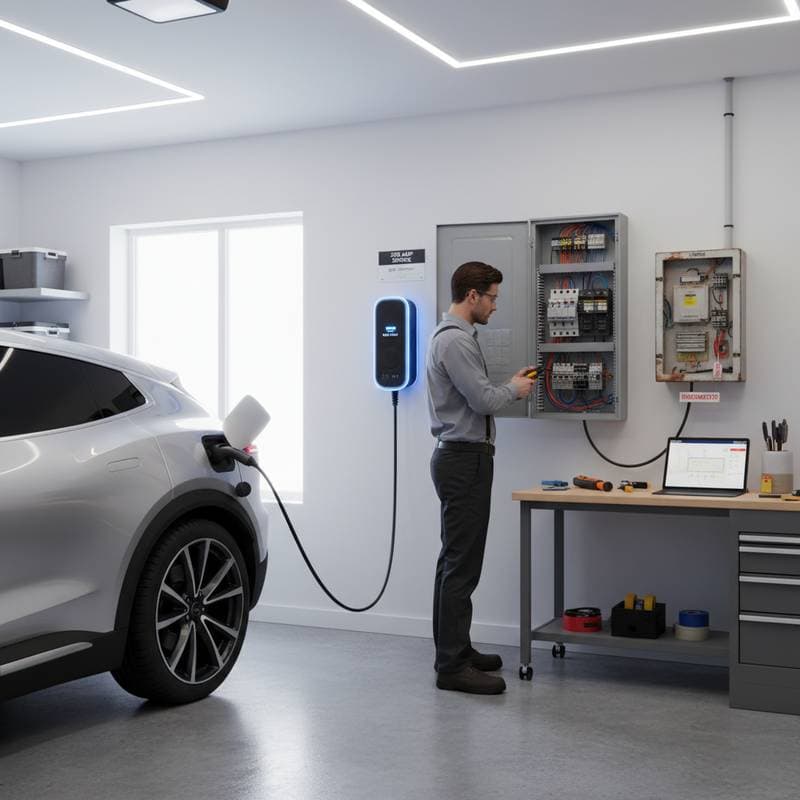
2026 EV Owners: Essential Panel Upgrade Costs
The quiet hum of an electric vehicle pulling into the driveway signals the arrival of innovative technology. Homeowners plug in the charger, observe the indicator lights activate, and experience a brief sense of seamless integration. Moments later, the circuit trips, extinguishing garage lights and halting appliances such as the freezer. This interruption reveals that the existing electrical panel, adequate for past needs, now faces challenges from contemporary energy requirements.
Such incidents occur frequently among individuals installing Level 2 EV chargers. Initial charging installations often expand into comprehensive electrical modifications. Homeowners benefit from reviewing panel upgrade costs in advance to avoid unexpected expenses and to establish a secure, effective charging system aligned with long-term living objectives.
Factors Influencing Panel Upgrade Expenses
Panel upgrade expenses vary based on panel capacity, installation complexity, and local market rates. Homeowners typically allocate between $1,800 and $4,500 for a 200-amp panel replacement. Projects involving panel relocation, new underground service lines, or utility meter enhancements may elevate costs to $6,000 or higher.
Consider this detailed cost breakdown:
-
Panel Capacity Options:
-
Upgrading from 100 amps to 200 amps: $1,800 to $3,000, suitable for most single-family homes with one EV.
-
Advancing from 200 amps to 400 amps: $3,500 to $6,000, ideal for households planning multiple EVs or integrated smart home systems.
-
Labor and Regulatory Fees:
Electricians charge $75 to $150 hourly. Upgrades generally require eight to ten hours, supplemented by inspection and permit costs of $200 to $500. In urban areas, these fees rise due to stricter compliance standards. -
Utility Involvement:
Utilities may need to upgrade meters or transformers for higher loads. Expenses range from $500 for basic meter swaps to $2,000 for extensive line extensions, particularly in rural settings where infrastructure distances increase complexity.
These investments secure long-term reliability. A robust panel accommodates EV charging while preparing the home for additions like solar arrays, efficient heat pumps, or energy storage solutions, reducing future renovation needs.
Indicators That Signal a Necessary Upgrade
Homeowners should evaluate their electrical system before EV charger installation. Professional assessment prevents issues, but self-checks provide initial insights. Review these signs of potential overload:
- Recurrent Breaker Tripping: Breakers activate frequently during peak usage, such as evenings when appliances and chargers operate simultaneously, indicating insufficient capacity.
- Panel Anomalies: Unusual warmth or audible buzzing suggests strained circuits or loose connections, which pose fire risks over time.
- Space Constraints: A fully occupied panel lacks slots for the required 240-volt, 50-amp circuit dedicated to EV charging.
- Outdated Equipment: Fuse-based systems or panels from brands like Federal Pacific or Zinsco present inherent hazards and fail modern safety tests; replacement becomes mandatory.
- Appliance Interference: Lights dim or flicker when high-power devices, such as dryers or ovens, engage, revealing uneven load distribution across circuits.
Absence of these symptoms does not guarantee adequacy. Schedule a load analysis to measure total demand in kilowatts, factoring in EV charging at 7 to 11 kilowatts for Level 2 units. Alternatives like subpanels, installed in the garage for $1,000 to $2,500, or smart load managers that prioritize charging during off-peak hours, may suffice without full replacement.
Step-by-Step Overview of the Upgrade Process
Familiarity with the upgrade sequence minimizes disruptions. Electricians follow standardized procedures to ensure precision and compliance. The timeline spans one to three days, influenced by permitting and utility schedules.
- Initial Evaluation and Planning: The electrician conducts a site survey, calculates current and projected loads using tools like amp clamp meters, and proposes a panel size based on the home's square footage and appliance inventory.
- Approval and Preparation: Submit plans to local building departments for permits, which verify adherence to codes. Coordinate with the utility for any service upgrades, including temporary power disconnection notifications to residents.
- Installation Phase: Disconnect power, dismantle the existing panel, transfer and reorganize wiring to code-compliant configurations, and mount the new panel with modern breakers, surge protectors, and clear labeling for easy maintenance.
- Verification and Activation: An inspector reviews grounding, wire gauges (typically 6-gauge for EV circuits), and overall integrity. Upon approval, the utility restores service, often within hours.
- Final Integration: Install the EV charger on the dedicated circuit, test functionality under load, and provide homeowner documentation, including warranty details and maintenance schedules.
Prepare for power outages by arranging backup lighting, charging portable devices in advance, and informing neighbors if shared utilities apply. Post-upgrade, monitor the system for the first week to confirm stability.
Ensuring Safety Through Code Adherence
Electrical regulations update regularly to address emerging technologies like EV charging. Bypassing panel verification risks code violations, potential insurance denials during incidents, and hazards such as overheating or arc faults. Engage licensed electricians versed in the National Electrical Code, particularly Article 625 on EV equipment.
Certified professionals prioritize elements like GFCI protection on outlets, appropriately sized conduits to prevent overheating, and tamper-resistant breakers. For homes in seismic zones, secure mounting prevents panel shifts during earthquakes.
Upgrades offer enhancements beyond basics. Integrate whole-home surge suppressors to shield electronics from voltage spikes, affordable at $300 to $600. Add arc-fault circuit interrupters on bedroom circuits and accessible emergency shutoffs near the garage, elevating overall resilience against electrical failures.
Engaging Professionals for Reliable Results
While minor tasks appeal to handy homeowners, panel work demands expertise due to 240-volt risks and code intricacies. Avoid DIY approaches that could lead to fines or unsafe conditions. Instead, select electricians through verified directories or referrals, verifying state licensing and insurance.
Begin with a $150 to $300 inspection fee, which yields a detailed report on capacity, deficiencies, and cost estimates. Request multiple quotes, comparing not just price but inclusions like warranties (typically one to five years) and post-installation support. Inquire about EV-specific experience to ensure optimal circuit design for chargers from brands like Tesla or ChargePoint.
Optimizing and Sustaining Your Upgraded System
A new panel extends beyond immediate EV needs, supporting evolving home energy demands. To maximize value, integrate smart monitoring devices that track usage via apps, alerting to imbalances before issues arise. Annual inspections, costing $100 to $200, maintain peak performance and catch wear early.
Consider energy efficiency pairings: Pair the upgrade with LED lighting retrofits or programmable thermostats to lower overall consumption, offsetting charger demands. Explore rebates from programs like those under the Inflation Reduction Act, which offer up to 30 percent credits on qualified electrical improvements, potentially recouping $500 to $1,500.
Homeowners who invest thoughtfully in these upgrades enjoy uninterrupted charging, reduced energy bills through efficient distribution, and peace of mind knowing their electrical foundation aligns with sustainable living. This preparation transforms potential challenges into opportunities for a resilient, forward-looking home.