
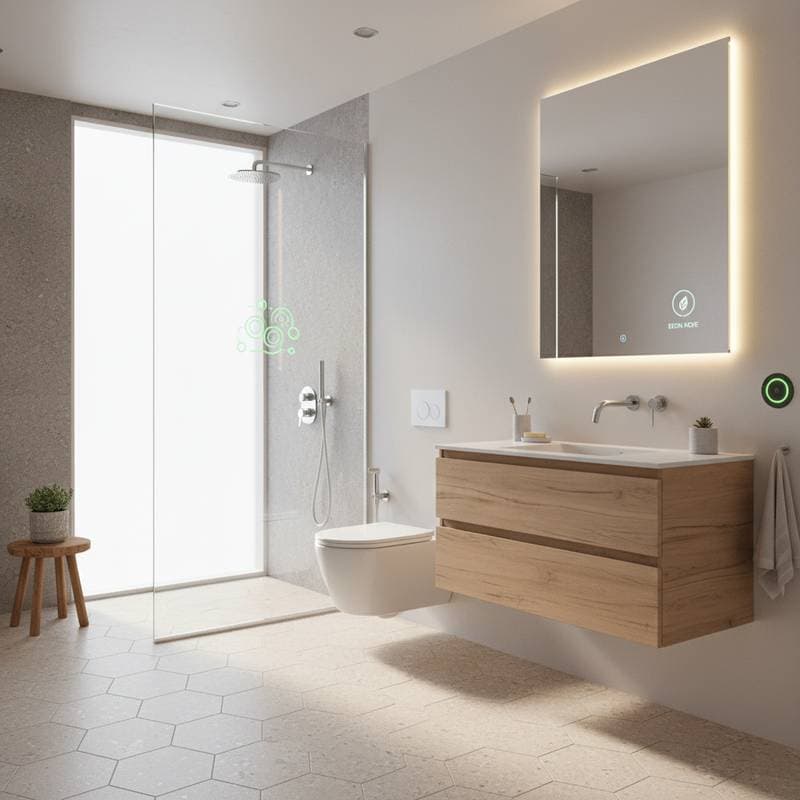
Eco Friendly Bathroom Upgrades That Reduce Utility Costs
Eco friendly bathroom design now ranks as a top priority for many homeowners. Practical upgrades deliver lower water and energy use along with improved comfort. These changes produce measurable savings while supporting a healthier indoor environment.
The following sections outline specific steps that balance performance, cost, and sustainability.
Focus First on Water Saving Fixtures
Bathroom water use accounts for the largest share of household consumption. Targeted fixture replacements cut volume without reducing function.
High efficiency toilets require less than half the water of older units. Quality models range from 150 to 400 dollars, with professional installation adding about 150 dollars. Dual flush designs allow selection of lower volumes for liquid waste.
Low flow showerheads maintain pressure while limiting flow to under two gallons per minute. Units priced between 25 and 75 dollars recover their cost through reduced water and heating expenses within several months.
Motion sensor or aerated faucets further limit waste. WaterSense certified products meet federal efficiency standards and discourage unnecessary running water during daily routines.
Improve Energy Performance Through Lighting and Ventilation
Lighting and air circulation affect both operating costs and moisture control. Efficient choices reduce consumption and extend equipment life.
LED fixtures use up to 80 percent less electricity than incandescent bulbs and operate for many more hours. Damp rated models paired with dimmers or occupancy sensors cost 100 to 200 dollars for a typical bathroom yet generate ongoing savings.
ENERGY STAR exhaust fans with built in humidity sensors activate automatically and operate more quietly than basic models. Installed prices fall between 120 and 250 dollars while lowering the risk of mold related repairs.
Tankless water heaters supply hot water on demand. Although initial investment may reach 1000 dollars, energy reductions typically offset the expense within a few years.
Evaluate Costs and Long Term Returns
Many upgrades offset their purchase price through lower monthly bills and reduced maintenance.
- Water saving fixtures total 200 to 600 dollars and can save up to 150 dollars each year.
- LED lighting conversion costs 100 to 200 dollars and saves about 50 dollars annually.
- Efficient ventilation runs 120 to 250 dollars and cuts humidity related repairs by up to 40 dollars per year.
- Sustainable materials often last longer, decreasing replacement frequency.
Over a standard ownership period these improvements accumulate thousands of dollars in savings. Properties featuring certified eco elements also tend to attract buyers who value lower operating costs.
Decide Between DIY Work and Professional Installation
Certain tasks remain suitable for homeowners while others require licensed trades.
Painting, fixture swaps, and hardware mounting fall within typical DIY scope. Plumbing alterations, electrical connections, and ventilation ducting demand permits and code compliance.
Review local regulations before starting any project that involves water or power lines. Licensed contractors provide necessary documentation and protect warranty coverage.
Larger projects benefit from a designer experienced in sustainable materials. Such professionals coordinate selections, verify certifications, and prevent costly errors.
Maintain Performance Over Time
Regular care preserves efficiency and appearance.
Clean aerators and showerheads several times each year to remove mineral deposits. Inspect seals and grout lines for gaps that allow leaks or moisture damage.
Change ventilation filters twice annually. Materials such as bamboo or cork require annual resealing to retain water resistance.
Apply These Planning Practices
- Map the existing layout before moving fixtures to avoid new pipe runs.
- Source materials from regional suppliers to reduce transport costs and emissions.
- Confirm WaterSense, ENERGY STAR, or FSC labels on every product.
- Favor straightforward designs that perform reliably over many years.
- Record utility statements before and after installation to measure actual savings.
Daily Habits That Extend Benefits
Once upgrades are complete, simple routines multiply results. Shorter showers, reusable towels, and plant based cleaners reduce both resource use and operating expenses. These adjustments create a bathroom that remains comfortable while supporting long term resource conservation.